Your body doesn't know you're single yet
Here's the thing nobody tells you about post-breakup sex: your nervous system is still operating under the assumption that there's another person involved. Even if the relationship ended badly, even if you're relieved, even if you initiated it. Your body doesn't experience breakups the same way your brain does.
That disconnect between wanting pleasure and actually feeling it is one of the most common things I hear from people navigating solo again. You might find yourself reaching for touch and then freezing. Or feeling nothing when you'd normally feel something. Or feeling guilty about wanting pleasure at all because the breakup is still fresh. All of that is completely normal, and none of it means something is wrong with you.
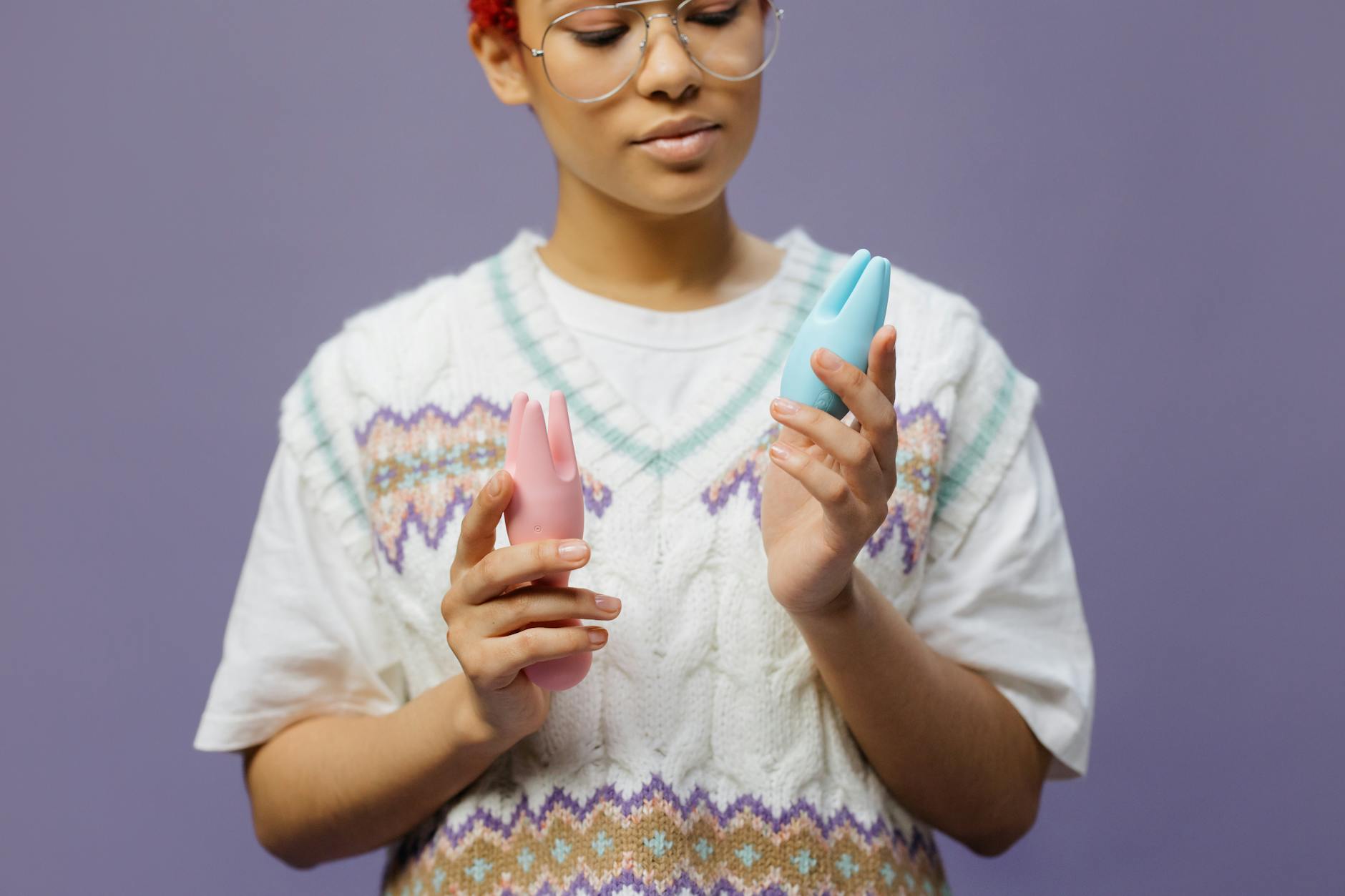
A lemon clitoral vibrator can help bridge that gap because it doesn't ask you to perform or manage another person's needs or experience. It's just you and sensation. And that simplicity is exactly what your nervous system needs right now.
Why vibration works better than touch when you're rebuilding
When we're grieving a relationship, even a good breakup, our nervous system gets confused about touch. Your brain associates it with a specific person, a specific context, a specific version of yourself. That association doesn't disappear overnight just because the relationship did.
Vibration short-circuits that pattern. It's novel enough that your brain doesn't file it under "partner touch" automatically. It's also consistent in a way touch can't be. There's no interpretation involved, no wondering if you're doing it right, no management of someone else's experience. You control the intensity, the duration, the exact location. You can start, stop, change patterns, explore without explanation.
Lemon vibrators, specifically, use air-suction stimulation rather than direct vibration. This creates a gentler, more diffused sensation that works beautifully for people whose nervous systems are a bit frayed. The suction feels less aggressive than traditional vibration, which matters when you're re-learning what pleasure even means for you solo.
The first session is about permission, not outcome
Most people want their first solo experience post-breakup to be incredible. Big orgasm, proof that they're fine, sign that they've moved on. That's actually the opposite of what helps. You're not trying to get somewhere. You're trying to practice coming home to your own body.
Set a time when you have at least 30 minutes with no interruptions. Not because you need 30 minutes to orgasm, but because rushing signals to your nervous system that this is a task to complete rather than something you deserve. Put your phone in another room. Close the bedroom door. Light a candle if that helps you shift into a different mindset. The ritual matters more than the specific details.
Start with just holding the Lem. Don't turn it on yet. Feel the weight of it. Notice the texture. Let your brain register this as a new thing, separate from any previous experience. That regulatory pause is doing real work.
How to use a lemon vibrator when everything feels numb
Start on the lowest setting. This is not about finding your edge quickly. Lower settings on a lemon clitoral vibrator actually give you more information because there's less noise in the signal. You can feel the subtle difference between one area and another without being overwhelmed.
Begin at the outer edge of your clitoris rather than directly on it. The lem vibrator's suction design means you're not dealing with blunt force. But when your nervous system is already dysregulated from grief, working directly at the most sensitive spot can feel jarring rather than pleasurable.
Once you've explored the outer areas, gradually move closer. Stay where it feels good. You might not orgasm. You might not even get fully aroused. That's completely fine. The goal right now is to rebuild your own feedback loop. Your body needs to remember that pleasure is available to you solo, that you can create it, that you deserve it. Those are three separate lessons, and they don't all happen in one session.
Building a practice that sticks
The difference between a breakup recovery strategy that works and one that fizzles is consistency, not intensity. I recommend aiming for twice a week for the first month, not nightly. Here's why: your nervous system needs time to integrate the message that pleasure is safe for you solo. More frequent sessions can start to feel like you're checking off a task rather than reclaiming something.
Try the same time on the same days, if possible. Tuesday and Saturday evenings. Thursday mornings. Whatever fits your real life. Consistency trains your body to anticipate it, which actually builds arousal over time. Your parasympathetic nervous system (the one that handles pleasure) loves patterns.
Keep a simple note in your phone: date, how you felt before, what setting you used, how you felt after. You're not grading yourself. You're tracking your own signals so you can notice what's actually shifting. After three weeks, you'll see patterns you couldn't see day to day.
What to expect as your nervous system recalibrates
Week one often feels mechanical. You're doing it, but you're watching yourself do it. That observer quality is your brain trying to stay safe. That's not failure. That's exactly what should happen.
Week two might feel lonely in a new way. Using a lemon vibrator means you're not distracting yourself with another person's response. That can bring up feelings about the breakup that you've been managing around. That's not the vibrator failing you. That's your grief getting space to move. Let it.
By week three, most people start noticing a shift. Pleasure becomes less complicated. Your body starts separating solo sensation from partnered sensation. Arousal might come faster. Orgasms might feel different than they did with a partner, and that's not a problem. Different is just different. You'll likely find that lemon clitoral vibrators create a more localized, sharper sensation than partnered sex, and solo pleasure doesn't need to feel the same way to feel good.
When to pause and reassess
If you're using a lemon vibrator daily as a way to avoid sitting with the breakup, gently check in with yourself. Solo pleasure is a form of self-care, not a distraction strategy. If you notice you're using it to numb rather than to feel, that's worth talking through with a therapist.
If pleasure genuinely hasn't shifted after three weeks of consistent practice, it might be worth getting checked by a doctor. Grief can absolutely affect arousal, but so can thyroid issues, medication side effects, or depression that's sliding into something bigger. There's no shame in that overlap.
If you're feeling triggered or re-traumatized by solo pleasure, that's also real information. It might mean you need a different tool, or it might mean you need more time. You're not broken. You're just gathering data about what helps you feel safe.
The bigger picture: rebuilding your relationship with pleasure
Using a lemon clitoral vibrator after a breakup isn't really about the vibrator. It's about rebuilding your relationship with your own body as a source of safety and joy that doesn't depend on anyone else. That's radical, honestly. Most of us learned to experience pleasure through partnership or performance. Reclaiming solo pleasure is reclaiming a part of yourself that the breakup didn't take.
You're not trying to prove you're over it. You're not trying to show that you're fine. You're just learning what it feels like to give yourself something good, on your terms, because you matter. The vibrator is just the tool. The real work is the permission.
Take your time. Your body will thank you for it.
People also ask
How long does it typically take to feel pleasure again after a breakup?
There's no timeline that applies to everyone. Some people reconnect with solo pleasure within days. Others take weeks or months. The key factor isn't how quickly it happens, it's whether you're being consistent and gentle with yourself. If you're practicing twice weekly with a tool like a lemon vibrator and noticing small shifts by week three, you're on track. If three months have passed and nothing has shifted despite consistent effort, that's worth discussing with a therapist, because something else might be happening beneath the surface.
Is it normal to feel guilty about using a vibrator after a breakup?
Completely normal. Guilt often shows up because we've internalized the idea that solo pleasure is somehow unfaithful or selfish, or because the breakup still feels fresh and we're unsure what we're allowed to feel. That guilt doesn't mean you shouldn't be using a lemon vibrator. It usually means you need permission to prioritize yourself. Your pleasure matters. Solo pleasure is not a betrayal. It's self-care, and you deserve it.
Can I use a lemon clitoral vibrator with a partner eventually, or should I keep it just for solo time?
You can absolutely incorporate a lemon vibrator into partnered sex eventually if you want to. But right now, in this recovery phase, I recommend keeping it as your solo tool. You're rebuilding trust with your own body. Once that foundation is solid, bringing a toy into partnered sex becomes a choice from a place of abundance rather than a way to fix something. Give yourself the solo practice first.
What if I don't orgasm when using a lemon vibrator?
Orgasm is not the goal right now. Reconnecting with sensation is the goal. Pleasure exists on a spectrum, and orgasm is just one point on it. Many people find that the first time they use a lemon vibrator post-breakup, they experience arousal and sensation without reaching orgasm. That's not failure. That's your nervous system coming back online. Keep practicing, stay patient, and the orgasm will likely follow once your body feels safer.
Should I be using lube with a lemon vibrator?
It depends on your body. Some people find that the suction design of a lemon clitoral vibrator works beautifully with natural lubrication alone. Others prefer adding a small amount of water-based lube to reduce friction and increase comfort. If you're feeling any discomfort, absolutely use lube. There's no rule that says you shouldn't. Your comfort matters more than any supposed standard.
How do I know if I'm healing versus just distracting myself?
Healing involves integration. You're feeling the feelings while also reclaiming pleasure. Distraction is avoiding the feelings and using pleasure to numb out instead. The difference is whether you're also processing the breakup through therapy, conversations with friends, journaling, or time. If you're practicing with a lemon vibrator twice a week and also sitting with your grief, moving through anger, talking about what happened, you're healing. If you're using the vibrator multiple times daily to avoid thinking about the breakup entirely, that's different. Check in with yourself honestly about which pattern you're in.