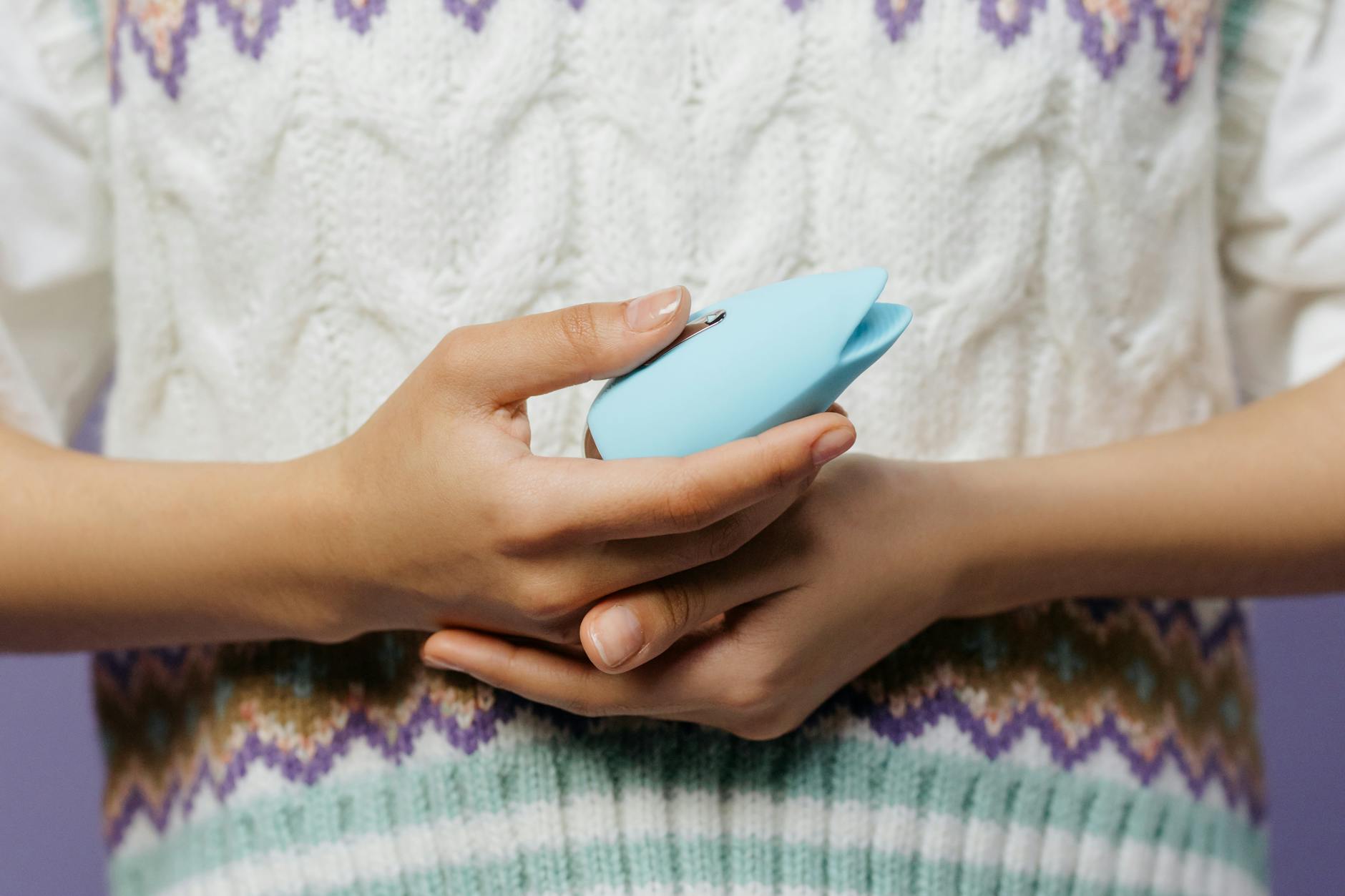
Here's what nobody tells you about arousal timing
Arousal doesn't arrive on a schedule. For some people it floods in within seconds. For others, it's a slow climb that takes 20 minutes, or 40, or longer. Both are completely normal. The problem isn't your body. The problem is that we've built a sex culture around the faster version, then blame ourselves when we're the slower version.
Using a lemon clitoral vibrator when arousal takes time changes everything. Not because it magically speeds things up, but because it gives you permission to stop fighting your actual timeline and start working with it.
What's actually happening when arousal is slow
Think of arousal like a dimmer switch instead of an on-off button. Some bodies have dimmers that start at 5% and gradually climb. Others start at 5% and stay there for a while before the climb even begins. This isn't dysfunction. It's just how the nervous system is wired.
A few things contribute to slower arousal. Stress hormones can genuinely suppress sexual response. If your brain is partially in work mode or parenting mode or financial-worry mode, your body won't fully cooperate, no matter how much you want it to. Medication can do this too. Antidepressants, birth control, blood pressure drugs, antihistamines. The list is long and often invisible.
Age also matters. Estrogen and testosterone both influence arousal speed. As either drops (whether from natural aging, medication, or hormonal changes), many people notice arousal requires more time and more direct stimulation. This is not a sign of lost capacity. It's just a shift in what builds response.
Here's what's important: slower arousal doesn't mean weaker orgasms, fewer orgasms, or less pleasure. It just means the setup takes longer.
Why a lemon vibrator actually helps with slow arousal
A lemon clitoral vibrator works well for slow-burn arousal because it removes the pressure to respond quickly. You're not relying on friction or movement from a partner, which can feel urgent and performance-focused. You're using precise, consistent stimulation that you control completely.
The suction mechanism on lemon sexual toys is particularly useful here. Instead of the kind of direct pressure that requires a body to already be somewhat aroused to feel good, suction engages the clitoral nerves in a gentler way that often builds sensation gradually. You can start at a low pattern, let it work, and escalate only when your body is ready. No rushing. No frustration.
Most importantly, using a vibrator gives you something concrete to do while arousal builds, which paradoxically makes arousal easier. You're not lying there wondering "Is it happening yet?" You're actively engaged. Your mind stays focused. Your body follows.
Setting up for success when arousal is slow
Three foundational things need to happen before you even turn on a lemon vibrator.
One: Clear your schedule mentally. If you're worried about time, you're not going to relax enough for arousal to deepen. You need at least 45 minutes blocked off, ideally with no anxious eye on the clock. Tell your partner you need uninterrupted time. Close the apps that ping. Put your phone in another room.
Two: Create actual comfort. Slow arousal needs a body that feels safe and settled. Temperature matters. Soft fabrics matter. Pillows arranged so nothing hurts. A space that feels private and clean. This isn't luxury. This is neurology. A cold, uncomfortable, exposed body will not warm up arousal easily.
Three: Start with touch that isn't sexual. Spend 10 minutes on your own body first. Massage your shoulders. Stroke your arms. Notice the texture of what you're wearing. Let your nervous system downshift from alert mode into present mode. This priming matters more than anything.
The actual technique with a lemon vibrator
Once you're settled, warm, and ready, here's the sequence.
Start clothed or partially clothed. Turn on your lemon clitoral vibrator at the lowest setting. Hold it against the outer labia, not directly on the clitoris yet. Move it slowly around the entire vulva. You're not looking for pleasure right now. You're warming up sensation.
Spend 5 to 10 minutes here. This is not wasting time. This is building arousal gradually, exactly how slow arousal works best. Your tissues are becoming more sensitive. Lubrication is starting. Blood is moving toward the area.
Then remove your clothes and continue with the same pattern. Low intensity, broad area, no rushing. As you feel sensation becoming clearer and more distinct, you can gradually move to pattern 2. When that feels good, try pattern 3. The progression should take another 10 to 15 minutes minimum.
Only when arousal feels genuinely present. When your hips are starting to move. When you want more intensity. Then move the vibrator directly to the clitoris.
Keep the intensity moderate rather than maxing out immediately. If you've spent 20 or 30 minutes building up to this point, your body is probably more sensitive. What felt mild 15 minutes ago might feel intense now.
The mental part is actually the hard part
The biggest obstacle to enjoying slow arousal is the voice in your head saying this is taking too long. That you should already be more aroused. That something is wrong.
Shut that voice down. You're not behind schedule. You're on your schedule.
If you're using a lemon vibrator with a partner, let them know what you're doing and roughly how long you expect it to take. "I'm going to spend some time with this. I'm probably going to need about 30 minutes. You can watch, you can read, you can do your thing nearby. I'll let you know when I want you involved." This removes the ambient pressure of them waiting and wondering.
If you're solo, give yourself explicit permission to take whatever time you need. Arousal that takes 45 minutes is not worse than arousal that takes 5 minutes. It's just different. And honestly? The deeper the arousal buildup, the more intense the eventual release often is.
When slow arousal points to something else
Sometimes arousal is slow because of stress or medication or timeline mismatch. Sometimes it's slow because something deeper is off.
If arousal is taking dramatically longer than it used to, and nothing else has changed in your life or medication, it's worth checking in with yourself about desire. Not arousal, which is physical. Desire, which is the want. Do you actually want sex right now? Or are you doing this because you think you should?
If it's the latter, a lemon vibrator won't fix that. What you might need instead is a conversation. With yourself about what you actually want. With a partner if you have one about what you both actually want. With a therapist if the mismatch is deep and ongoing.
But if desire is there and arousal is just slow. If you're genuinely interested but your body takes its time warming up. Then what we're talking about here. The patience, the technique, the lemon vibrator. That fixes it completely.
People also ask
How long should arousal actually take?
There's no "should." Research shows arousal builds anywhere from 2 minutes to 45 minutes depending on the person, the day, stress levels, hormones, relationship dynamics, and what's happening in your life. If your timeline has shifted, that's worth noticing, but it doesn't mean anything is broken. Most people benefit from dedicating more time to arousal than they think they need. Rushing undermines the whole thing.
Can a lemon clitoral vibrator make arousal faster?
Not exactly. What it does is make slow arousal feel better and more intentional. You're not waiting passively for something to happen. You're actively building sensation in a way that your nervous system often finds calming. Sometimes that allows arousal to deepen faster than it would otherwise, but the goal isn't speed. It's depth. If you're chasing speed, you'll miss the point entirely.
Should I use lubricant if arousal is slow?
Yes, almost always. Even if you're producing lubrication, adding water-based lube reduces friction and makes stimulation feel more even and sustained. Slow arousal often means tissues take longer to fully plump with blood, so external lubrication bridges that gap. It's not a sign of anything wrong. It's just a helpful tool.
What if my partner gets impatient during slow arousal?
This is a conversation you need to have outside the bedroom. "My arousal takes time. That's how I'm wired. I need you to be comfortable with that." If they can't be, that's a compatibility issue worth addressing directly. A partner who pressures you to arousal faster than your body naturally works will make slow arousal slower and more stressful. That's on them, not you.
Does slow arousal mean lower sensitivity?
No. Often it's the opposite. People with slower arousal buildup frequently have more sensitive tissues and more nuanced sensation overall. They notice more subtlety. The trade-off is that it takes longer for those sensations to feel explicitly sexual, but once they do, they tend to be more layered and complex.
Can medication cause slow arousal?
Yes. SSRIs, some birth controls, antihistamines, blood pressure medications, and many others can all extend the timeline for arousal. If you're on a medication and have noticed this shift, check the side effects list. If it's listed, talk to your prescriber about whether alternatives exist. If it's not listed, mention it anyway. Many sexual side effects aren't formally documented but are still real and worth addressing.
Here's the actual bottom line
Slow arousal isn't a bug in your system. It's just your system's actual setting. A lemon vibrator, used patiently and with intention, lets you work with that setting instead of against it. You get the stimulation you need without any performance pressure. Your partner gets clarity about your timeline. Your nervous system gets permission to warm up at its own pace.
That's how you turn slow arousal from frustrating into actually better than the rushed version. Because when you stop fighting your body and start listening to it, that's when real pleasure shows up. Want to explore what works best for your specific situation? Get in touch with us and we can talk through what might help.
Sources
- Basson, R. (2000). The female sexual response: A different model. The Journal of Sex & Marital Therapy, 26(1), 51-65.
- Meston, C. M., & Frohlich, P. F. (2000). The neurobiology of sexual function. Archives of General Psychiatry, 57(11), 1012-1030.
- Leiblum, S. R., & Segraves, R. T. (1989). Sex therapy with aging adults. In S. R. Leiblum & R. C. Rosen (Eds.), Principles and practice of sex therapy: Update for the 1990s (pp. 352-381). The Guilford Press.