Let's talk about the elephant in the bed
Ectile dysfunction happens in roughly 40 percent of men by age 40, climbing to nearly 70 percent by 70. That's not a personal failure. It's biology. But here's what makes it relationship territory instead of just a medical issue. When ED shows up, both partners freeze. He panics about performance. She wonders if it's her fault or if attraction has shifted. The whole thing becomes a question nobody wants to ask out loud.
Then the sex stops.
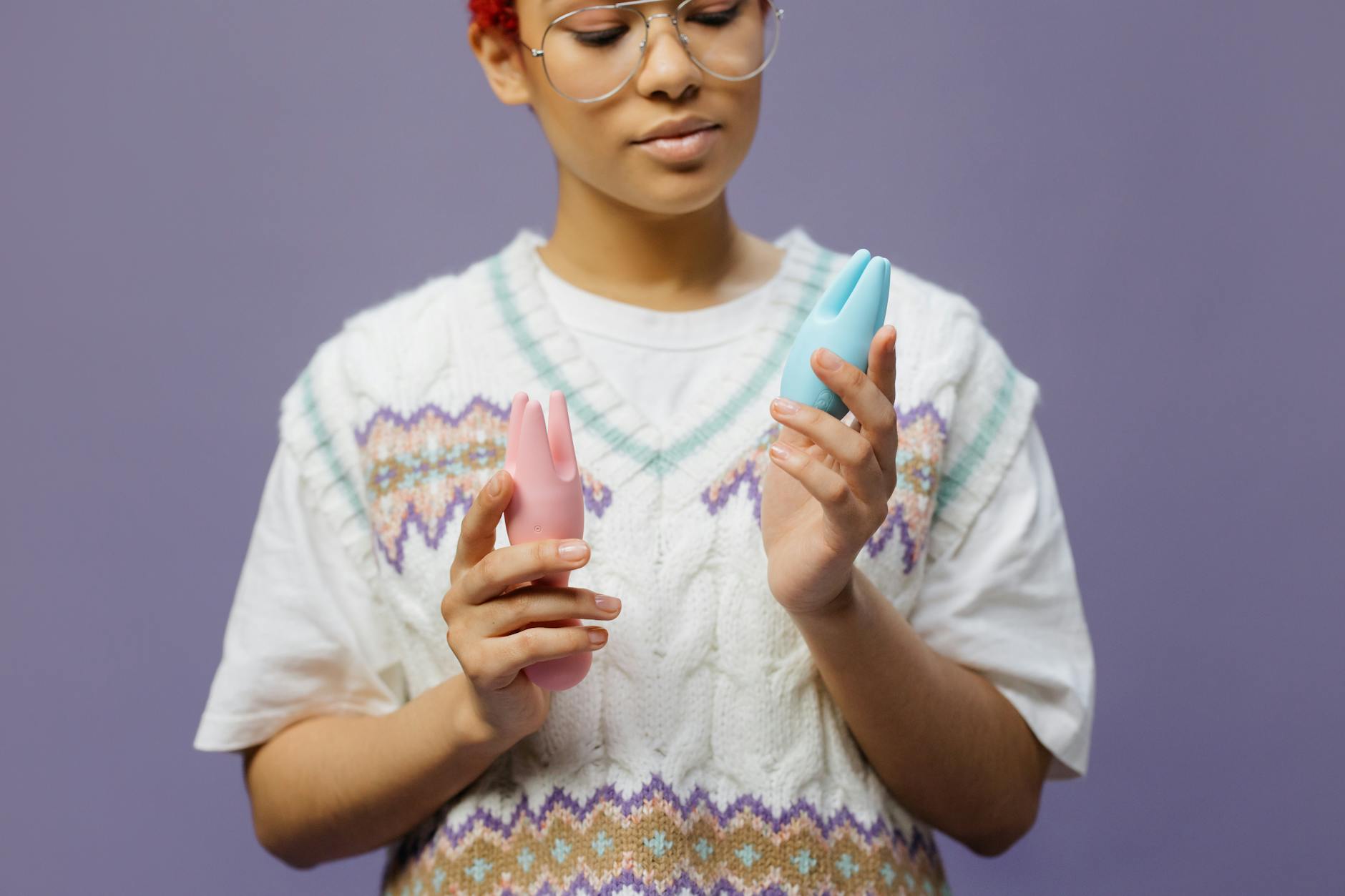
Lemon clitoral vibrators change this dynamic completely. Not because they fix ED (that's a conversation with a doctor). But because they shift the entire frame from "can he get hard" to "how do we both feel good." That's a fundamentally different question, and it's one your pleasure can actually answer.
Why ED derails couples more than it should
Here's the mechanism. ED happens, he feels embarrassed, he pulls back from intimacy to avoid the situation happening again. She interprets the pullback as rejection. He feels guilty. She feels less attractive. Within weeks, you're not touching at all. The irony is that anxiety makes ED worse, so the emotional withdrawal actually worsens the physical issue. It's a feedback loop.
Couples therapists call this "the avoidance spiral." And it's one of the easiest patterns to break if you have a specific tool.
How lemon vibrators shift the conversation
A lemon clitoral vibrator does something psychologically powerful. It moves you from a binary outcome (erection yes or no) to a spectrum of pleasure. Your orgasm doesn't depend on his physical response. Your satisfaction is independent. And suddenly there's room for actual connection instead of performance monitoring.
I've worked with couples where introducing a lem vibrator into their intimate routine didn't fix the ED. But it did something more valuable. It gave them permission to enjoy sex again while he was getting treatment for the actual issue. They stopped seeing sex as a failure when ED happened, and started seeing it as a different kind of intimacy.
That shift alone changes the trajectory of the relationship.
The conversation you need to have first
Don't just pull out a lemon vibrator one night and hope he understands. That reads as "you're not enough," even if your intention is the opposite. Instead, have this conversation outside the bedroom, maybe over coffee or a walk.
Try something like: "I love you, and I also want us to feel good together. ED is a real thing, and it doesn't mean we stop having pleasure. I've been thinking about exploring something that might help us both relax, and I want your thoughts." Notice what you're doing here. You're centering pleasure, not his dysfunction. You're positioning the vibrator as something for both of you, not a replacement.
If he's worried you're trying to replace him, be direct: "I'm not looking for an alternative to you. I'm looking for a way for us to connect without the pressure of how our bodies are supposed to perform. There's a difference."
Most partners respond well when they realize this is about reconnection, not criticism.
How to actually use it together
Start small. You don't need a complicated scenario. Simple works better. Maybe you're together on the couch, clothes off, not expecting anything to lead anywhere. He can touch you while you use the lemon vibrator. He can watch. He can participate by choosing which pattern you try, or just being present.
The key is removing the pressure for him to "perform" penetration or reach a specific outcome. His role is to be present and engaged with your pleasure, which is something ED doesn't touch.
Some couples find that lemon clitoral vibrators actually help with arousal for him too. When he sees you feeling good, when there's no pressure and just genuine pleasure happening, sometimes his body responds. But that's a bonus, not the goal. The goal is that you both get to feel something good.
If he's still hesitant, slow the pace. Maybe the first time you just show him the vibrator, talk about how it works, and use it solo while he watches. Some men need to get comfortable with the idea before they can be fully present with it.
The physical setup that helps
Position matters. You want him able to touch you easily while you're using the vibrator. Lying on your side facing each other works well. His hands are free to roam, you control the vibrator, and you're maintaining eye contact and connection.
Or try him sitting up against the headboard while you're between his legs. He can touch your back, your shoulders, your hair while you focus on what feels good. This keeps the sensory experience mutual without performance expectations.
Alternatively, you could use the vibrator while he's inside you (if that's comfortable and something ED isn't preventing). The combination of penetration and clitoral stimulation often leads to a stronger orgasm, which can actually help reduce some of the anxiety he's carrying about "not being able to" satisfy you.
What to do if shame is blocking everything
Sometimes ED comes with deeper stuff. Maybe he's been struggling with it for years. Maybe a previous partner made him feel broken about it. Maybe he thinks it means he's aging out of sexuality. That's not a vibrator problem. That's a therapy problem.
If shame is the barrier, consider couples counseling specifically around ED. There's nothing weak about getting professional help. Most sex therapists can walk a couple through this in three to five sessions. It's worth it. The longer you avoid it, the more entrenched the avoidance becomes.
While he's working on the ED itself (whether through medication, therapy, or lifestyle changes), the lemon vibrator lets you maintain physical intimacy without the performance context that's driving the anxiety.
When to involve a doctor
ED is almost always treatable. Sildenafil (Viagra), tadalafil (Cialis), and other medications work well for many men. Therapy, lifestyle changes (exercise, sleep, stress reduction), and sometimes hormone adjustments all help. A good GP or urologist can work through the options.
What matters for your relationship is that he actually goes. Some men avoid the doctor because they're embarrassed or because they assume nothing can help. If that's your partner, you might need to gently push. "I want us to have this part of our life back. Getting checked out isn't a sign of failure. It's a sign you care." Sometimes that permission from a partner is what it takes.
The pleasure part (because it matters)
Here's what I want you to know. ED is his to manage with medical support. But your pleasure is yours to own. Using a lemon clitoral vibrator when your partner has ED isn't settling. It's not a workaround. It's a choice to keep feeling good, to keep enjoying your body, and to stay connected to your partner while he works on something that's frustrating for him too.
When you use a lem vibrator together, you're also modeling something important. You're showing him that sex isn't a pass-fail system. It's a conversation. It's about two people trying to feel good together, whatever that looks like on any given night.
Most couples who move through ED together actually report that their relationship comes out stronger on the other side. Not because the ED goes away (though it often does with treatment), but because they learned how to talk about sex, pleasure, and bodies without shame. That's a skill that serves you long after the ED does.
People also ask
Will using a vibrator make his ED worse?
No. If anything, the reduced pressure often helps. When a man isn't anxious about "performing," his body is more likely to respond naturally. What makes ED worse is avoidance and mounting anxiety. A vibrator removes the performance context, which actually eases some of that pressure.
Is it normal to feel resentful about his ED?
Completely normal. Your sex life changed without your input. You're frustrated. You might also be worried about whether he still finds you attractive, or whether this is a sign of bigger problems in the relationship. Those feelings are valid. They're also worth talking through with him or with a therapist. Resentment grows in silence.
Should I bring up ED or wait for him to mention it?
If it's affecting your sex life, it's already affecting your relationship. Waiting usually just extends the awkwardness. A gentle conversation ("I've noticed we haven't been intimate in a while. I miss that. Are you okay?") opens the door without blame. He might be relieved someone finally said it out loud.
Can we use a lemon vibrator without discussing ED?
You could, but it risks him interpreting it as criticism or a sign that you're trying to replace him. The conversation doesn't need to be heavy. It can be playful. But it needs to happen. Something like: "I want to try something new together. I think you'll like it." That's enough.
What if he refuses to use any toys during sex?
Respect that boundary, but also understand what's underneath it. Is he uncomfortable with toys in general, or is it specifically about ED? Those are different conversations. If it's general discomfort, you can use the vibrator solo while he's present. If it's ED-specific, he might need to work through some of the shame before he's ready. That's where therapy helps.
How do I know if ED is psychological or physical?
A doctor can help clarify this. But practically speaking, it doesn't matter much for your relationship strategy. Whether it's stress, medications, hormones, or anxiety driving it, the immediate approach is the same. You maintain intimacy, he gets evaluated, you both stay connected. The cause is between him and his doctor.
What comes next
ED doesn't end your sex life. It just requires you to stop assuming sex has to look one way. When you introduce a lemon clitoral vibrator into the equation, you're saying: "I want pleasure. I want connection. I want us to figure this out together." Most partners hear that correctly. It's about closeness, not substitution.
If you're feeling stuck, start with the conversation. If he's avoiding a doctor's appointment, gently push. And if you want to explore lemon clitoral vibrators or other tools for mutual pleasure, reach out to our team. We're here to help you navigate this without shame.
Your pleasure matters. His willingness to work on ED matters. And the connection between you matters most of all. That's worth protecting.