When pleasure stops feeling like anything at all
You know the sensation is supposed to be there. You want it to be there. But when you touch yourself, or when a partner touches you, it's like receiving a text in a language you forgot you spoke. Something's happening, technically speaking, but you're not really present for it.
Numbness during sex or solo pleasure isn't actually rare. It's just not something people talk about openly until they're in a safe space to do so. And that's what we're here for.
Why sensation dulls in the first place
There are about six major culprits, and the frustrating part is that most of them are invisible until you connect the dots.
Medication side effects. Antidepressants, antihistamines, blood pressure meds, and even some birth control formulations can mute sensation. This isn't you broken. This is chemistry. SSRIs are notorious for this—they flatten affect across your whole nervous system, not just mood.
Stress and hypervigilance. When your nervous system is stuck in fight-or-flight mode, your parasympathetic nervous system (the one responsible for pleasure) gets shoved to the side. You're literally not safe enough in your own body to feel. This is especially true for people in high-stress relationships or those dealing with anxiety disorders.
Numbness as a protective mechanism. This one's more psychological than physiological. If you've been in a relationship where your pleasure didn't matter, or if you experienced trauma, your body might have learned to disconnect sensation as a form of self-protection. Brilliant and terrible at the same time.
Hormonal shifts. Low estrogen, low testosterone, or disrupted cortisol rhythms all affect nerve sensitivity. It's not just about lubrication. Sensation requires a specific hormonal environment.
Repetitive stimulation without variation. This is the one nobody warns you about. If you've been using the same rhythm, pattern, or pressure for years, your nerve endings literally adapt to it. They stop firing. Neurologically, it's like your body saying, "Cool, I've logged this sensation. Moving on."
Disconnection from your body. Sometimes numbness shows up because you've stopped paying attention. Work, kids, relationships, health stuff—all of it pulls you away from yourself. When you finally make time for pleasure, your nervous system takes a minute to remember how to receive it.
How numbness actually feels (so you know you're not alone)
It's not that you can't orgasm. You might still be able to. But there's no pleasure attached to it. It's functional. It's empty. Some people describe it as watching themselves from outside their body. Others say it feels like touching a numb leg after it's fallen asleep.
The shame spiral that follows is often worse than the numbness itself. You think, "Why can't I just enjoy this? What's wrong with me?" Nothing's wrong with you. Your nervous system is trying to tell you something. Usually, it's that something needs to change.
What a lemon vibrator actually does when sensation is muted
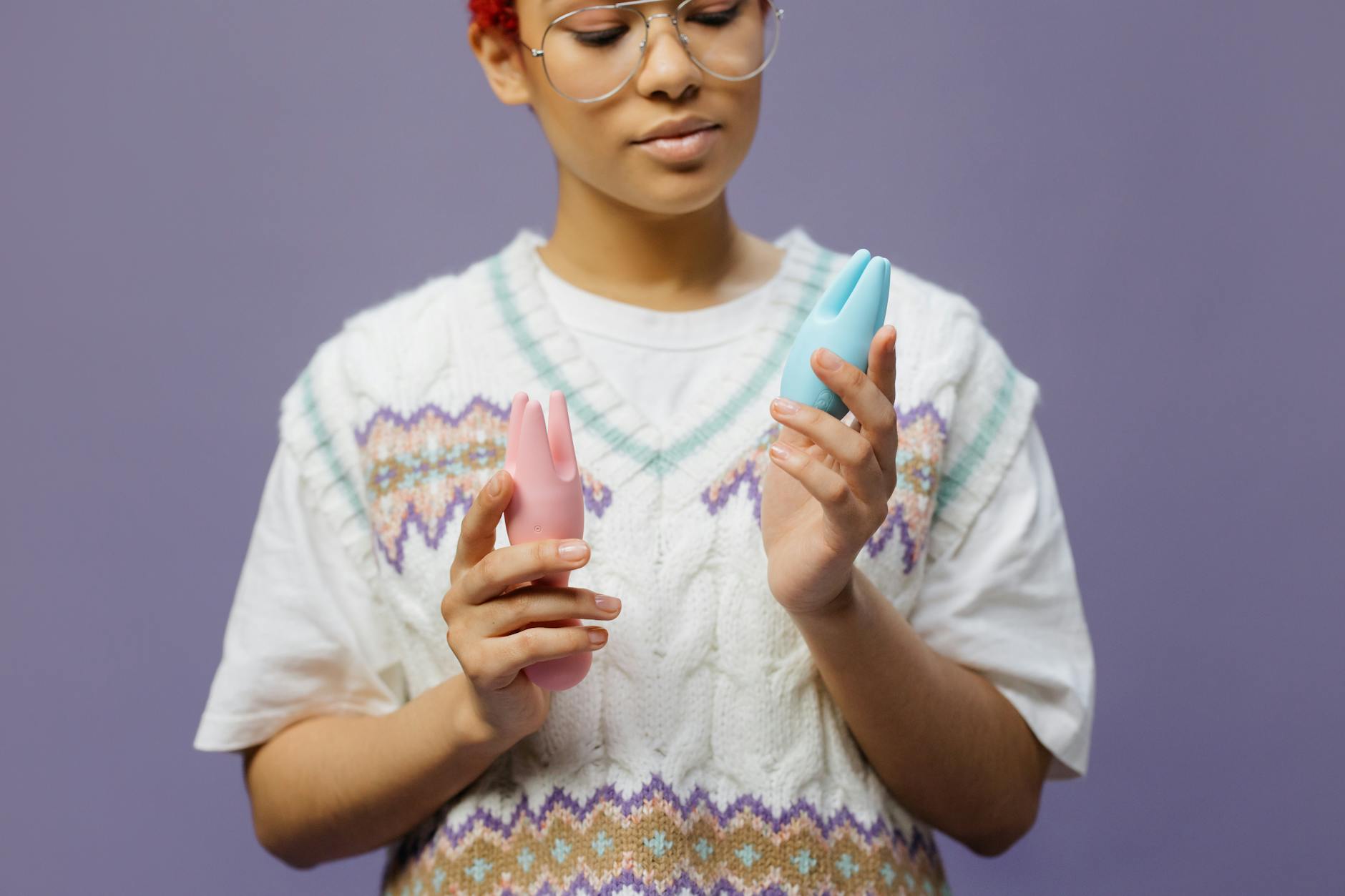
This is where it gets interesting. The lemon clitoral vibrator, and other clitoral vibrators like it, work through suction and pulsation rather than simple vibration. That's physiologically significant when sensation is dampened.
Here's why: when you're numb, your nerve endings aren't just sleeping. They're often either overstimulated (numb from too much of the same thing) or understimulated (numb from neglect). A lemon sucker style device wakes them up differently than a traditional vibrator would.
The suction creates a pressure differential that engages deeper nerve clusters. It's not just surface stimulation. Pulsation patterns activate your nerves in rhythms your body hasn't adapted to yet, which means they fire differently than they would with constant vibration.
Translated: your nerve endings have to pay attention again.
The protocol for reconnecting sensation
The first step is slowing down. Not metaphorically. Literally.
Set aside thirty minutes when you're not rushed, not performing, not checking in with anyone. Close the door. Turn off your phone. You're not here to achieve anything. You're here to notice.
Start with your hands before you bring in a lemon vibrator. Lie down. Touch your forearm with your fingertips. Really notice the sensation. Temperature, texture, pressure. Spend two minutes just noticing one arm. Then the other. Then your inner thigh. Your outer thigh. Your lower abdomen.
This sounds simple and boring, and it is. That's the point. You're reteaching your nervous system how to feel subtle information.
Then, apply a water-based lubricant to your external genitals. Not because you need it functionally necessarily, but because lube changes the sensation profile. It's a permission slip for a different experience.
Turn on your lemon vibrator to pattern 1 or 2 (the lowest, slowest settings). Apply it to the outer edges of your vulva first. Not direct clitoral contact immediately. Spend five minutes here. Notice if anything is happening. Tingling. Warmth. Pressure. Even if it feels like nothing, that's information.
Move gradually closer to your clitoris over another five to ten minutes. If you feel a sudden rush of sensation at any point, that's your nerve endings waking up. Don't chase it. Just note it and continue the slow exploration.
Why patterns matter more than intensity
When sensation is numb, people's instinct is to crank up the intensity. Stronger must mean more feeling, right? Actually, the opposite is often true.
Your nerve endings are more likely to fire for a novel pattern than for raw power. This is why varying the rhythm works. Set your lemon vibrator to a pattern you've never used before. Not the strongest one. The most interesting one. The pulsations that don't feel predictable.
Many people find that alternating between two or three patterns every couple of minutes reignites sensation faster than staying on one. Your nervous system has to stay present. It can't zone out.
The mental part is half the battle
Here's what gets in the way more than anything physical: the story you're telling yourself about what's happening.
"This should feel better by now." "I'm broken." "Maybe I just don't like this anymore." "Something's wrong with my body."
None of that's true. Your body is responding exactly as it should given what's happening to it. Numbness is a signal, not a verdict.
What actually works: curiosity instead of judgment. "I wonder what sensation I might find if I explore differently." "What if I just notice what's here right now, without wishing it was something else?" "What would it take to feel present in my own body?"
That mental shift matters because pleasure lives in the nervous system. If you're telling yourself a story of brokenness while you're trying to feel better, your nervous system stays in protection mode. It's protecting you from disappointment.
When to bring a partner into this
If you're partnered, they need to understand this is a solo process first. You're learning your own body again. Their job is not to fix it or to help you achieve orgasm. Their job is to sit back and let you have your own experience.
Many partners get anxious when sensation is numb. They take it personally, or they feel like they should be able to solve it. Spoiler: they can't. You have to do this first.
Once you start to feel sensation returning in your own exploration, then you can bring them in. And you do that by telling them specifically what you've discovered. "This pattern feels best." "I need more time to warm up." "I want you to watch for a while instead of touching."
Partner involvement works best when it's informed by what you've already learned about yourself.
When numbness points to something bigger
If you've been working with sensation reconnection for three to four weeks and nothing is shifting, or if the numbness came on suddenly alongside other symptoms (mood changes, pain, loss of desire for things you love), it's time to talk to a doctor or a therapist.
Sometimes numbness is a side effect that needs a medication adjustment. Sometimes it's pointing to depression or anxiety that needs attention. Sometimes it's relational, and you need help untangling what's happening between you and a partner.
None of that's a failure. It's information.
The long view
Sensation doesn't usually come roaring back overnight. It returns in stages. First, you might notice warmth. Then, localized tingling. Then, a sense of pressure or fullness. Over weeks, the texture of pleasure starts returning.
That timeline is normal. Your nervous system has been protecting you with numbness for a reason. It doesn't shed that protection quickly just because you asked nicely.
But it does return. And when it does, the pleasure that comes back often feels richer than it did before because you're not taking it for granted anymore. You're choosing to be present for it. There's a difference.