Here's what nobody tells you about anxiety and solo pleasure
You sit down with intention. Maybe you've blocked an hour, lit a candle, put your phone on silent. Then five minutes in, your brain shows up with a list of reasons to stop. Too selfish. Too loud. Not productive. What if someone needs you. The feeling is immediate and it's convincing.
This isn't broken. This is anxiety showing up in your body exactly where it shows up everywhere else. And it's wildly common.
Why anxiety crashes the solo party
Anxiety loves a quiet moment alone with your thoughts. When you're partnered and engaged with someone else, there's external input that keeps your mind from spiraling. But solo, there's nothing between you and the voice that says you shouldn't be doing this.
There's also a specific guilt layer that comes from being raised to believe pleasure should be relational. The message you absorbed (whether explicitly or by osmosis) was probably something like: pleasure is something you do with someone else, or it's wrong. Solo pleasure got filed under "selfish" or "desperate" instead of "essential maintenance."
Then there's the performance anxiety piece. Even alone, you might catch yourself thinking, "Am I doing this right? Should it feel different? Why isn't this working?" That internal judgment loop kills arousal faster than anything.
What actually changes with a lemon vibrator
Here's the thing about anxiety and physical sensation. Anxiety lives in your head. Intense physical sensation pulls you out of your head and plants you firmly in your body. That's not mystical. That's neurobiology.
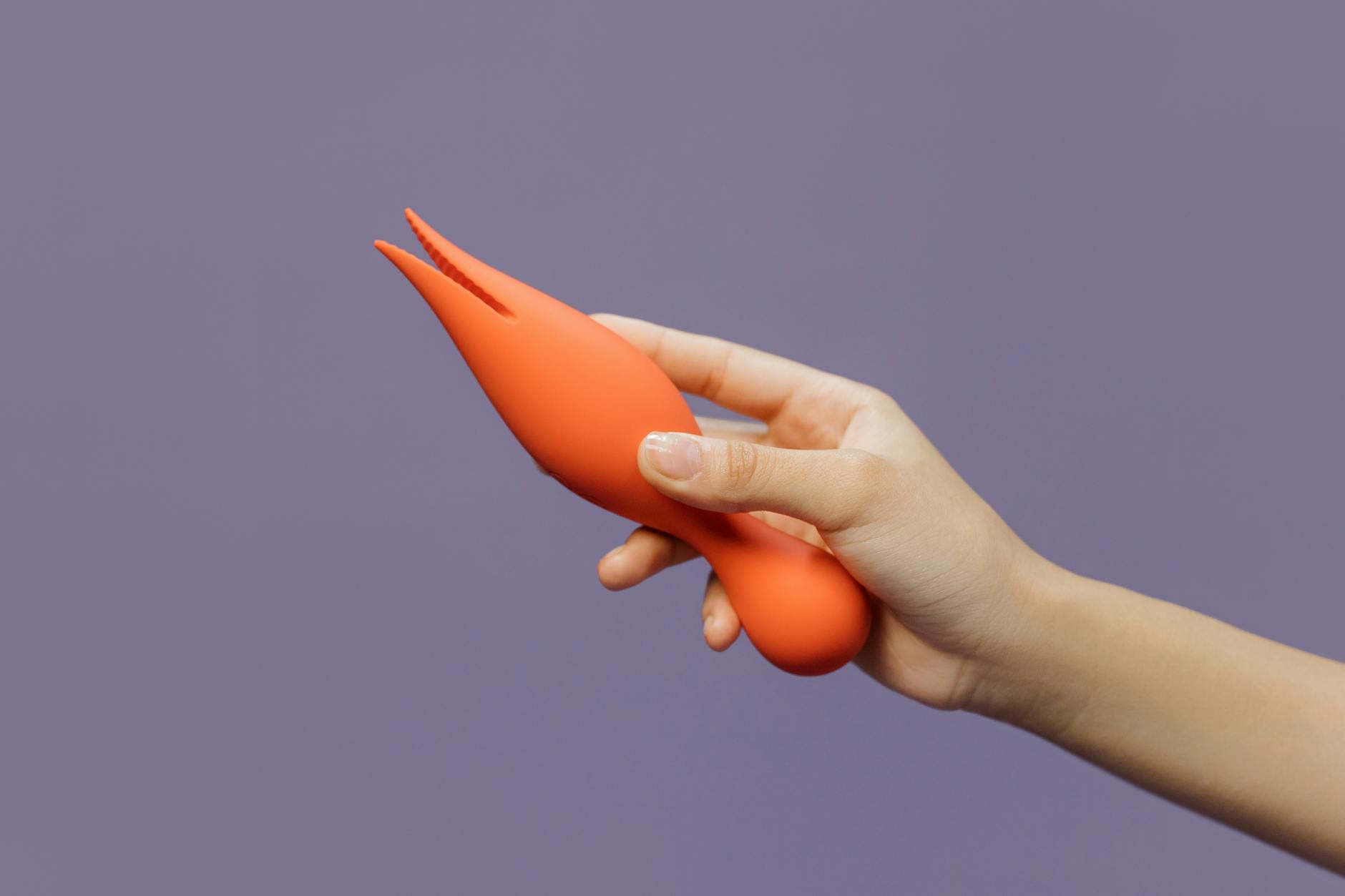
A good clitoral vibrator like the Lem forces your nervous system to pay attention to what's actually happening right now instead of what your anxious brain is narrating about it. The suction sensation is novel enough that your mind can't autopilot. You have to be present.
When you stop judging and start noticing, something shifts. You're not performing pleasure for an imaginary observer. You're literally just having a sensation. And sensations don't require permission.
The setup that actually reduces anxiety
Four things I recommend to every client who brings this to my office:
1. Remove the performance setup. Don't light ten candles and put on music and wear special lingerie. That frames solo time as a performance. Instead, just exist in normal clothes in a normal room. Make it boring. Make it practical. Anxiety hates boring.
2. Set a time boundary, not a goal. Say "I have 15 minutes" instead of "I want to orgasm." This removes the pass-fail component that anxiety loves to exploit. If you orgasm, great. If you don't, you still completed the task of showing up for yourself.
3. Have water and your phone nearby. Sounds random, but anxiety often disguises itself as "I need to do something else right now." By removing the friction of getting up, you remove one of anxiety's escape routes.
4. Start with the lowest setting. On a lemon vibrator, that's pattern one. Anxiety escalates when sensation feels too intense or unexpected. Let your body acclimate. You can always increase intensity. You can't undo a jolt.
The mental game that actually works
When the anxious voice shows up (and it will), here's what works better than trying to silence it:
Name it. Out loud if you need to. "That's anxiety. I notice it. It's not real. I'm staying anyway."
This sounds simple but it's doing something specific in your brain. You're separating the thought from reality. Anxiety is a thought. Reality is that you're safe, you're alone, you deserve this time.
Then just keep going. Don't wait for the anxiety to disappear before you keep touching yourself. That's the trap. Anxiety doesn't disappear first. You move forward while it's present, and it gradually quiets because it's getting no signal that anything bad is happening.
It's like exposure therapy for your own pleasure.
Why lemon clitoral vibrators specifically help with this
I mention lemon vibrators a lot because the design does something particular. The suction pattern is rhythmic but not repetitive. It engages your attention in a way that a simple back-and-forth vibration doesn't. Your brain has to stay present with it.
Compare this to something like a wand vibrator that's just one steady hum. After 30 seconds, your mind drifts. You're back in anxious thought loops. With a lemon vibrator, the pattern changes, your clitoris responds differently to each pulse, and you're anchored in sensation.
Some of my clients also report that the external suction feels less invasive than internal vibration, which means less performance anxiety about whether they're using it "right."
What to actually do when you freeze mid-session
You start, you're doing fine, then suddenly you feel awkward or self-conscious or like you're wasting time.
Here's the permission slip: you can just stop. No judgment. Try again tomorrow.
Or you can try this instead: slow down. Not faster. If anxiety is spiking, you probably went too fast. Back the vibrator down to pattern one. Go slower. Breathe longer.
Often what feels like it's not working is actually just too much sensation too fast. Your nervous system is in a low-level state of alert. Slow it down and let your body actually track what's happening.
If you need to, you can also just hold the vibrator against your body without turning it on. The pressure alone can be grounding. Anxiety loves to say "this is pointless." Pointlessness is actually your nervous system telling you it needs to slow down.
The mindset shift that changes everything
This is the part that matters most and it's the hardest to write about because it's not tactical.
Solo pleasure is not training wheels for partnered sex. It's not foreplay for something else. It's not a backup plan for when you don't have a partner. It's foundational self-knowledge.
When you know what your body actually responds to, without performance pressure, you get to bring that knowledge everywhere. You get less anxious overall because you're not operating on other people's ideas of what you should feel.
Your pleasure solo is not selfish. It's data. It's medicine. It's the difference between living in your body and living in your head.
You deserve to know what you like.
Common questions about anxiety and solo play
Can a lemon vibrator actually reduce anxiety during solo time?
It can absolutely help redirect your nervous system. The physical sensation of a clitoral vibrator is intense enough that it pulls your focus from anxious thoughts into present-moment sensation. That said, the vibrator is a tool, not a cure. The real work is the permission you give yourself to be there. The vibrator just makes it easier to stay.
What if I feel guilty even thinking about solo pleasure?
That's the messaging you absorbed, and it takes work to undo. But here's what I know from decades of practice: the guilt doesn't come from doing anything wrong. It comes from an old belief that was installed when you were young and absorbing messages about what bodies are for. You can literally decide that belief isn't true anymore. It's uncomfortable at first, but it's possible. Solo pleasure is not a character flaw. It's self-advocacy.
How do I know if it's anxiety or if I just don't like solo play?
Anxiety is usually accompanied by a sense of pressure or racing thoughts or physical tension. If you feel calm and just genuinely uninterested, that's different. But most people who think they don't like solo play have actually never tried it without anxiety present. Give yourself permission to find out.
Should I use a lemon vibrator or try something else first?
If anxiety is your main barrier, start with whatever feels least intimidating. A lemon vibrator is great because the sensation is novel, which keeps you present. But if even holding a vibrator feels like too much, start with just your fingers. The tool matters less than the practice of staying present. Once you can do that without anxiety spiking, adding intensity becomes easier.
Is it normal to feel more anxious the first few times I try solo play with a vibrator?
Completely. You're doing something new and your nervous system is on alert. That's not a sign to stop. That's just your body processing something unfamiliar. If you can stay present through the first few sessions without pushing yourself, your nervous system will realize nothing bad is happening and you'll relax more. It's the same process as getting used to anything new.
What if my partner would judge me for solo play?
Solo pleasure is your business. That said, if you have a partner who would judge you for taking care of your own body, that's a conversation worth having. A partner who loves you wants you to know yourself. That includes knowing what you like solo. If that's not safe with your current partner, that's information. Solo play time becomes even more important then, not less.
You belong in your own pleasure
Anxiety will always have opinions about what you should be doing. Your job is to do it anyway. Start small. Use whatever tool helps you stay present. A lemon clitoral vibrator works because it demands your attention, which is the antidote to anxiety.
But the real work is deciding that you're worth this time. That your pleasure matters even when nobody else is watching. That solo doesn't mean lonely or selfish. It means you're learning who you actually are.
You already know how to perform for other people. It's time to learn what you actually like. Get curious. Stay present. And if anxiety shows up, just keep going anyway.
Ready to start exploring? Check out how other people navigate using a lemon vibrator when you feel disconnected from your body for more strategies on rebuilding that connection. Or learn how to use a lemon vibrator for better pleasure when you're new to toys if this is your first experience with any kind of vibrator.
Your pleasure is not a luxury. It's information about yourself that you deserve to have.