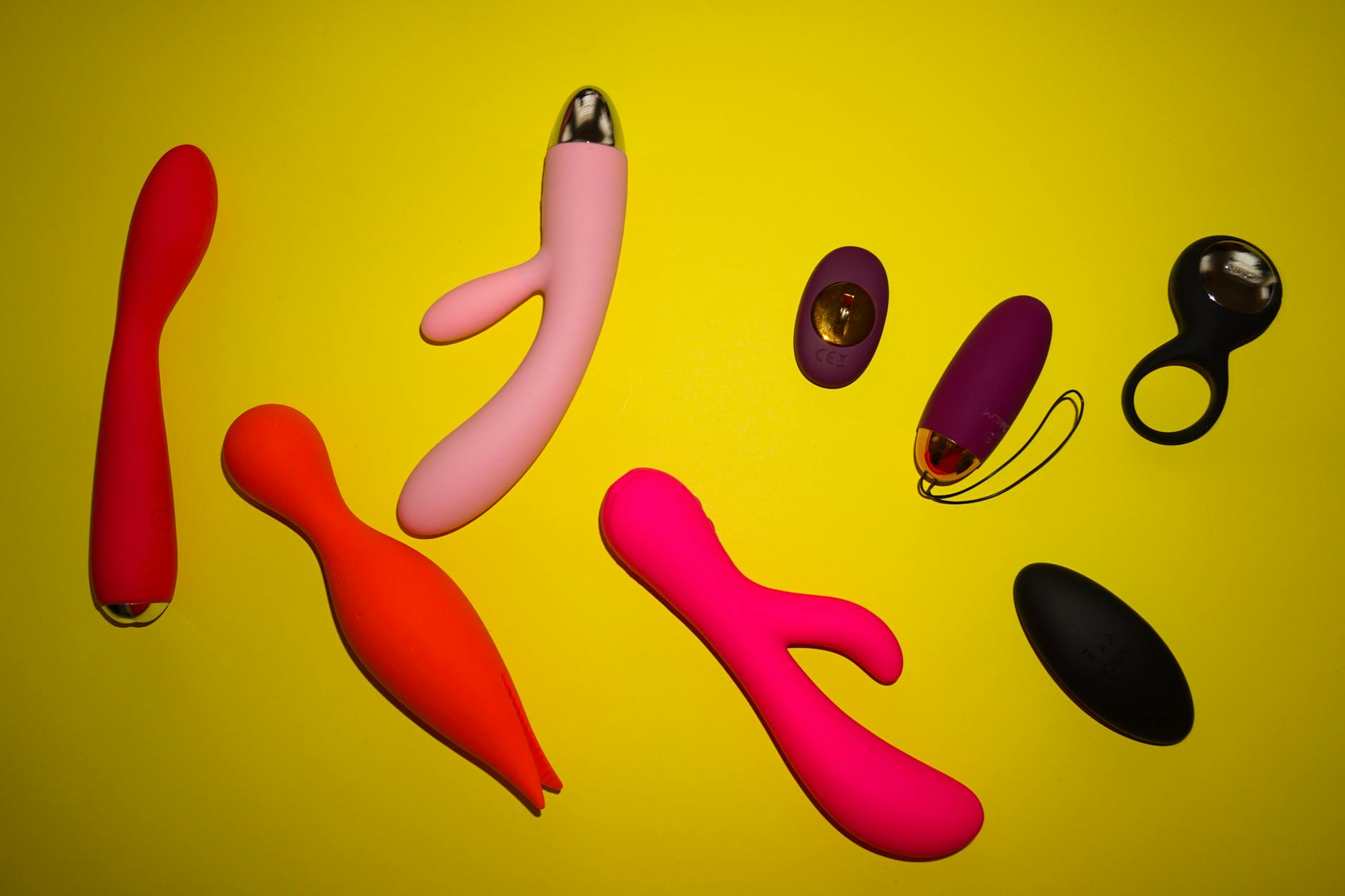
Let's name what's actually happening
Desire doesn't die in long-term relationships. It transforms. The early-relationship surge of novelty and urgency quiets into something slower, quieter, easier to ignore. This is so normal that calling it a problem often creates the problem itself.
Here's the thing nobody tells you clearly: that quieting is not a sign you've picked the wrong person. It's a sign you've been together long enough that your nervous system has settled. And that settling, while it feels like loss, can actually become the foundation for something deeper.
But deeper takes intention. And sometimes, it takes a tool.
Why clitoral vibrators matter for long-term couples
When desire has been low for months or years, initiating sex often feels loaded. It carries the weight of "we haven't done this in a while" or "are we still attracted to each other" or "will this even work." That weight kills arousal faster than anything.
A clitoral vibrator, paradoxically, removes the pressure to perform. You're not testing whether desire exists yet. You're simply creating sensation, together, without the old script. This matters because desire in long-term partnerships often returns when the stakes feel lower.
Lemon clitoral vibrators in particular work well here because the suction mechanism builds sensation gradually. You're not jumping straight to intense stimulation. You're moving slowly into pleasure, which gives both of you time to breathe, connect, and remember why you liked this in the first place.
The three reasons desire fades that actually respond to different fixes
Before you reach for a vibrator, it helps to know what you're actually dealing with. Desire loss isn't one thing.
Reason 1: Habituation. You know each other's body like a map you've walked a thousand times. The novelty is gone, and without novelty, the nervous system doesn't spike. This is extremely responsive to introducing new sensation. A lemon vibrator creates that neurological surprise without requiring new partners or risky territory.
Reason 2: Emotional distance. Years of small resentments, unspoken requests, or just the grind of managing a household together can create a wall. No vibrator fixes this alone. But using one together can create a bridge. It's a moment where you're collaborating toward pleasure instead of toward the next bill or school pickup.
Reason 3: Physical change. Bodies change. Hormones shift. Medications alter sensation. Recovery time after work or kids leaves you depleted. This one a vibrator genuinely helps with. A lemon clitoral vibrator doesn't require the same sustained effort from a partner that traditional intimacy does. You can both relax more.
Most couples dealing with faded desire are actually dealing with a mix of all three. That's why the solution is rarely just "use a toy." But a toy, combined with permission to slow down and reconnect, often works.
How to actually introduce this without it feeling like a band-aid
The introduction matters as much as the tool itself. Here's what I see work:
Frame it as curiosity, not as a fix. "I found something I want to try with you" lands differently than "I think we need this." The second one implies something is broken. The first implies you want to explore together.
Use it for yourself first, alone. If you have a lemon vibrator and you actually like it, your partner will sense that. Pleasure is contagious. If you're using it because you think you should, they'll sense that too. Spend some time alone with it. Find out what you actually like. Then bring that information to your partner.
Start with it as part of foreplay, not as the whole event. You're not replacing traditional intimacy. You're adding texture to it. Use the vibrator while your partner is touching you elsewhere, or while you're both present but not necessarily intercourse is the goal. This reframes it as an ingredient, not the main course.
Talk about sensation, not technique. "This feels good here" is more intimate than "move it faster." You're narrating your own pleasure, which means your partner isn't responsible for guessing. They get to witness what actually turns you on.
What changes when you move slowly back into pleasure
Most couples I work with report something specific happens when they give themselves permission to rebuild desire at a slower pace. Sex becomes less like a performance checklist and more like a conversation. There's room to pause, laugh, adjust, try something different.
The clitoral vibrator often becomes a tool you both relax into using. You're not waiting for one person to "do" something. You're both tending to pleasure together. That shared responsibility often rekindles something that felt lost.
There's also something important that happens to your nervous system. When you've avoided sex because desire felt absent, the anticipation builds tension. Will it work? Will we feel awkward? Will it confirm that we've lost something important? Using a tool changes that. You're not testing the relationship. You're just making space for sensation.
The conversation piece that actually matters
Here's what I almost never see couples do, and what almost always shifts things: explicitly name that desire is not the same as love. That you can love someone and have low sexual desire. That you can love someone and want to rebuild this part of your connection.
Most long-term couples dance around this. They assume low desire means something is wrong with the relationship or with them. It usually means neither. It means you've been married or partnered long enough that the automatic arousal switch has turned quieter.
A conversation where you say "I want to bring sexuality back into our connection, not because something is broken, but because I miss this part of us" changes everything. It's no longer a fix. It's an intention.
When to use a Lemon vibrator specifically
Lemon clitoral vibrators work especially well if you're rebuilding after a long gap because the suction-based stimulation is gentler than traditional vibration. If you've been anxious about sex or if your clitoris has become extra sensitive from lack of use, this matters.
The sensation builds rather than shocking your nervous system. You start at a lower intensity and work your way up. This pacing helps your body remember what pleasure feels like without the pressure of immediate intensity.
If one of you has lower sensation threshold due to medications or hormonal shifts, a quality clitoral vibrator often restores sensation that felt lost. That restoration can be surprisingly emotional. People often cry a little when they remember what they'd forgotten.
What happens next
Once you've reintroduced pleasure intentionally, a few patterns often emerge. Some couples find that sexual frequency stays low, but quality skyrockets. They're having less sex, but it matters more. Some find that once the shame and pressure lift, desire naturally returns to something closer to what it was earlier.
The couple who sees the most transformation is usually the one who realizes that bringing back sexuality isn't about returning to how things were. It's about creating something new that fits who you are now. A lemon vibrator isn't a time machine. It's permission to explore the two of you at this stage.
Your desire doesn't have to look like it did at year two to be real, healthy, and worth investing in.
People also ask
How do I know if faded desire means my relationship is in trouble?
Low sexual desire alone isn't a relationship problem. But if low desire coexists with poor communication, ongoing resentment, or emotional distance, that's different. Before you assume the relationship is breaking, check in on whether you're fighting, whether you're emotionally present, whether you're solving problems together. Sexual intimacy is one component of a partnership. If everything else is functional, desire often returns with intentional rebuilding. If nothing else is working either, sexuality is probably just the visible symptom of something bigger.
Can using a vibrator make things feel mechanical instead of intimate?
Only if you frame it that way. If you're using it to avoid connection, yes, it becomes mechanical. If you're using it as a tool for exploring pleasure together, it's the opposite of mechanical. You're paying attention to sensation, communication, and presence. That's the definition of intimacy. A lemon clitoral vibrator is just a tool for building that, not a replacement for it.
What if my partner is hesitant about toys?
Start with curiosity instead of persuasion. "I'm interested in exploring this together" is different from "we need to do this." You might also ask what specifically makes them hesitant. Is it feeling inadequate? Is it discomfort with toys generally? Is it something else? Once you know the actual concern, you can address it. Sometimes people worry that a vibrator means they're not enough. Reframing it as something you do together, not something that replaces them, shifts that.
How often should we use a vibrator if we're rebuilding desire?
There's no schedule. Some couples find that using one once a week helps them rebuild momentum. Others use it less frequently but more intentionally. The goal isn't frequency. It's quality of connection. If you're using it as a pressure valve that prevents real conversation, that's a problem. If you're using it as a tool that helps you both feel good and connected, frequency becomes irrelevant.
Will desire come back completely if we keep using vibrators?
Sometimes it will. Sometimes it'll stay lower than it was early on, but become richer. Long-term desire rarely looks like new-relationship desire, and it shouldn't. You know each other too well for that spike of novelty. But you can build something quieter and deeper. A vibrator helps create the conditions for that rebuilding. It's not magic. It's just permission, plus sensation, plus presence.
Is there a way to use a vibrator that feels more intimate for long-term couples?
Yes. Use it while you're close, making eye contact, taking breaks to touch each other's skin. Slow down. You don't have to climax every time. Sometimes the goal is just presence and sensation together. Have your partner use it on you while you're talking, or use it on yourself while they're watching. The slower you move, the more intimate it typically feels. Speed and intensity aren't the markers of intimacy. Attention and presence are.
If you're sitting with a partner where desire has quieted and you're not sure how to rebuild it together, that's worth taking seriously. Not in a panicked way. In a thoughtful way. You've built something together over years. That foundation is worth tending to. Sometimes that tending looks like relearning how to communicate about intimacy. Sometimes it looks like creating new space for pleasure together. It almost always looks like permission. Start there.