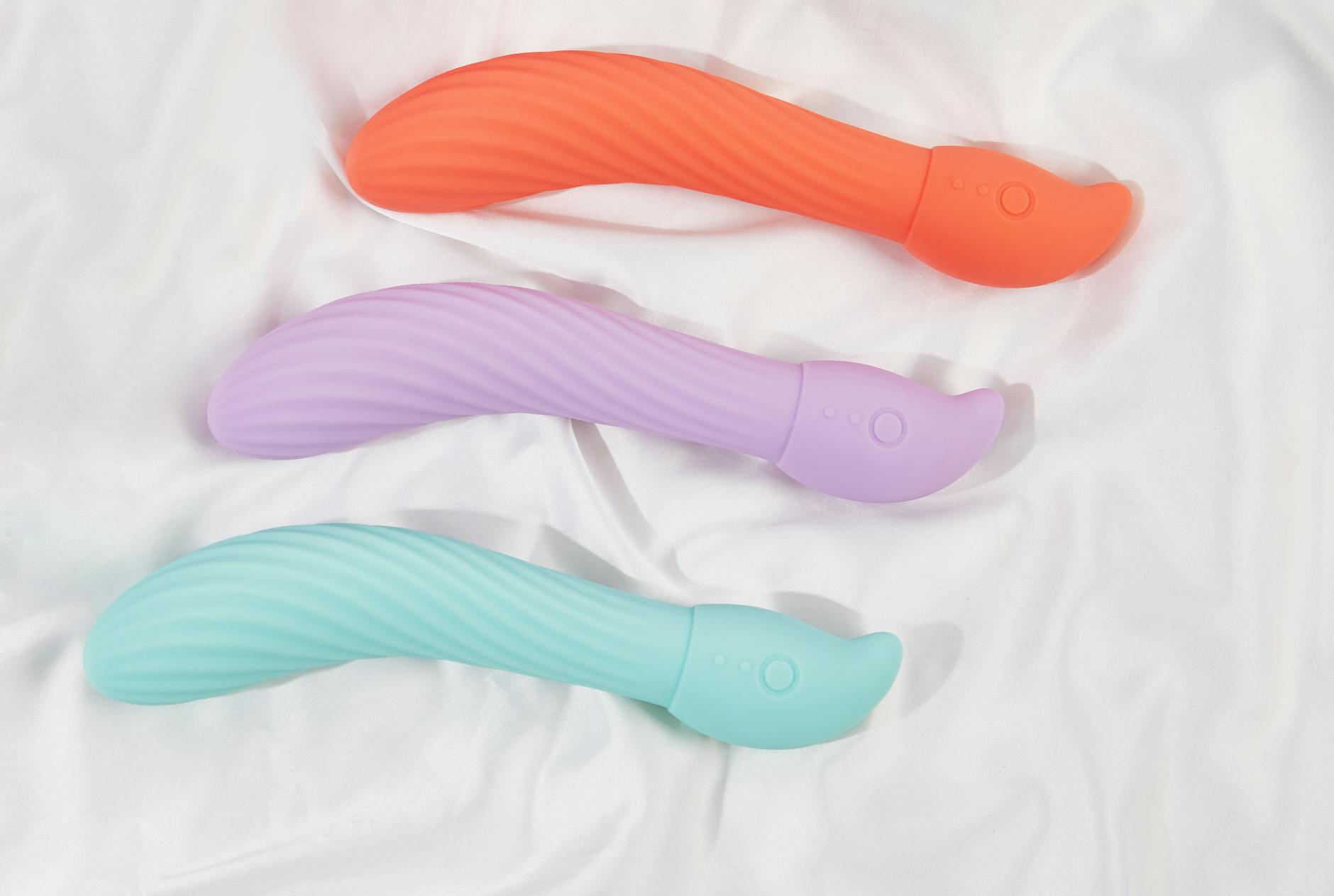
Let's start with the real anxiety
Most people don't bring a vibrator into partnered sex because they're worried it'll make their partner feel replaced, inadequate, or like something's wrong with the sex they're already having. That fear is understandable. It's also, in my experience working with couples, almost never what actually happens.
What actually happens is that couples who communicate well about adding a lemon vibrator or other clitoral toy report stronger arousal, higher satisfaction, and often deeper intimacy because the conversation itself is intimate. You're negotiating pleasure together. That matters.
Why lemon vibrators work so well with partners
Lemon clitoral vibrators are designed with suction or pulse patterns that stimulate the clitoral complex from outside, which means there's room for your partner in the picture. Unlike penetrative toys, a lemon vibrator isn't taking up space. It's adding sensation to sensation.
This changes the dynamic entirely. Your partner can still be inside you, fingers can still move, mouths can still work. The vibrator isn't a replacement. It's an instrument you're playing together.
Lemon adult toys also tend to have intuitive controls, minimal buzzing sound, and a shape that leaves your hands and your partner's hands free to touch other parts of your body. That's not accidental design. It matters.
The conversation before you even touch it
Here's what I ask couples to do before anything else. Sit down, not in the bedroom, and have this conversation:
"I've been thinking about trying a vibrator with you. Not instead of anything we do now, but alongside it. I'm curious if you'd be open to exploring that together."
Then stop. Listen.
If your partner hesitates, ask what's underneath it. Is it novelty anxiety? Insecurity? Practical concerns about noise or complexity? Different answers need different responses. "I'm worried I'm not enough" gets handled differently than "I don't know how to use something like that."
Many partners actually feel relieved. Some have been hoping you'd suggest it. Some are nervous but willing. A smaller number genuinely don't want to. All of those are valid. The point is: you're choosing together.
First time setup and pacing
Start solo or with a lot of foreplay before the vibrator enters the room. Your partner should see you comfortable with it, understand the controls, know how it feels. If they're watching you use it, even for 30 seconds, the mystery evaporates. It becomes a tool instead of a threat.
When you introduce it to partnered play, go slow on intensity. Pattern 1, low speed. This isn't about chasing an orgasm. It's about noticing what the combination of sensations feels like. Can your partner feel the vibration through their fingers or inside you? What does that do to their arousal? What does it do to yours?
Many couples report that the vibration actually increases their partner's pleasure too, even though they're not the ones directly using the toy. Sensation is shared. Energy changes. The rhythm of sex shifts into something different and often better.
Positioning that actually works
Honestly, most basic positions don't need to change. A lemon vibrator sits against the clitoris while penetration happens. Your partner can be inside you, and you or they can hold the vibrator in place. It's low logistically, high in terms of sensation.
If penetration isn't part of what you're doing, there's even more flexibility. Your partner can use their hands or mouth on other parts of your body while the vibrator works on your clitoris. The combination of different stimulation types layered together is often what creates stronger or multiple orgasms.
Some couples find that taking turns holding the vibrator intensifies focus. You hand it over, they take control of the pattern and speed, and you can concentrate on sensation without managing the toy. That role shift can feel surprisingly intimate.
What to do about rhythm and control
This is where many couples stumble. One person is used to setting the pace of sex, and now there's a vibrator changing the tempo they've built.
Talk about control beforehand. Who adjusts the speed? When? Does your partner ask, or do you guide their hand? Some couples find that the person receiving pleasure should always control the vibrator's intensity, because they know what feels good in the moment. Others like it when their partner takes charge of speed and pattern, because being guided by someone else's intuition is its own kind of turn-on.
There's no universal right answer. But deciding together prevents frustration mid-act.
Addressing the fears that actually come up
Some partners worry that using a vibrator during partnered sex means you prefer it, or that you need it to orgasm with them now. These are real fears and they deserve honest answers. The truth for most people is: no. The vibrator enhances what you're already doing. It doesn't replace the person or the connection.
If you do find you have a harder time orgasming without the vibrator afterward, that's a physiological thing that can be addressed. Take breaks. Use it less frequently in partnered situations. Your body adapts, and so does your pleasure response. But that conversation happens after you've actually tried it, not before.
Some partners also feel self-conscious about the time it takes. If you orgasm more quickly with vibration, that's good news, not bad. Shared pleasure should feel good for both people, which sometimes means less waiting, more enjoyment.
When lemon vibrators actually strengthen couples
I've worked with couples who brought toys into their sex life specifically to reconnect after years of routine. The novelty isn't about the vibrator. It's about trying something together, building new patterns, and communicating about pleasure instead of assuming you know what the other person wants.
That's the hidden gift of introducing a clitoral vibrator. It forces a conversation that most long-term partners never have. "What feels good right now? What are you curious about? How do you want to be touched?"
Once you've had that conversation once, it gets easier. You start asking about other things. You become more generous with each other's pleasure.
The thing nobody mentions
Sometimes, adding a vibrator to partnered sex makes people realize they need to talk about bigger things. Maybe one partner has been unsatisfied for a while and didn't know how to say it. Maybe the other didn't know they could ask for what they wanted. The vibrator isn't the real issue. It's just the thing that opens the door.
If that happens, that's actually the good outcome. You're building the relationship skills you need.
FAQ: Couples and lemon clitoral vibrators
Can you use a lemon vibrator during penetrative sex?
Yes, easily. Most lemon vibrators are designed with shapes that work against your clitoris while your partner is inside you. The vibration adds sensation without getting in the way. Many couples find this combination creates stronger or multiple orgasms because you're receiving stimulation from two sources at once. Positioning might take a minute to figure out, but it's usually intuitive once you try it.
What if my partner feels jealous about the vibrator?
That's one of the most common hesitations, and it's worth taking seriously. Before using it together, have a conversation about what the vibrator is and what it isn't. It's not a replacement. It's a tool you're adding to what you already do. Many partners feel less threatened once they understand the logistics and see that it actually enhances your pleasure and theirs. If jealousy persists, consider whether there are other intimacy or communication issues underneath it worth exploring.
Should we use a lemon vibrator every time we have sex?
No. Mix it up. Use it sometimes, skip it other times. Variety keeps pleasure fresh and prevents your body from becoming dependent on the same stimulus. This also lets you enjoy both kinds of sex. Solo play with the vibrator is totally different from partnered play. Each has its own appeal.
How do you handle the noise factor?
Lemon vibrators tend to be quieter than you'd expect, but if noise is a concern, lower settings are much quieter than high ones. Start on a lower pattern and speed. You might not need maximum intensity anyway. And if you're in a situation where sound is genuinely an issue, there are positioning tricks that muffle vibration slightly. But often couples find the noise is less of a problem than they anticipated.
What if one partner wants to use it and the other doesn't?
That's a valid difference and it deserves respect. You don't have to do everything the same way. One approach: you use it solo, or only in partnered situations if your partner consents and wants to be involved. Another approach: you have the conversation about why your partner is hesitant and whether any of those concerns can be addressed. But forcing it isn't the answer.
How do you introduce a lemon vibrator if your partner might be uncomfortable?
Start by mentioning it in a low-pressure moment. Not during sex, not right before. Maybe over coffee or in a text. "I've been thinking about trying a vibrator during sex. Would that be something you'd want to explore together?" Give them space to think about it. Let them ask questions. And if they need time to warm up to the idea, that's fine. Some people need weeks to feel curious instead of threatened.
The actual outcome
Most couples who talk openly about adding a vibrator to partnered play report that it doesn't change the fundamental dynamic. What changes is that they feel less stuck. More creative. More willing to ask for other things.
That's what a lemon vibrator can do for a couple. Not fireworks. Just honesty, novelty, and the knowledge that you're building something together instead of performing something separate.
If you're ready to explore this with your partner, start with the conversation. Everything else follows from there. And if you want to understand how how to use a lemon clitoral vibrator on your own first, that's often the best place to start. Knowing your own body makes partnered exploration so much easier.
You deserve sex that feels good and feels right. That usually means talking about it first.