
Here's the thing about being too sensitive
Your clitoris has 8,000 nerve endings packed into a space smaller than a pea. Direct touch can feel like pressing a button that's wired to your entire nervous system. Some people love that intensity. Some people find it unbearable. Neither is wrong. The difference is in how those nerve endings respond to stimulation, and there's actually a really good reason a lemon clitoral vibrator works so differently than your fingers.
What makes direct touch feel overwhelming
When you use your hand or fingers, you're applying pressure directly to the most sensitive part of your clitoris. The glans, that exposed tip, has a concentration of nerve endings that can feel sharp, overwhelming, or even painful with direct friction. Add vibration and you're multiplying that sensation. Your brain can't always tell the difference between too much pleasure and actual discomfort when the signal is that intense.
This gets worse under certain conditions. Stress narrows sensation. Anxiety makes everything feel sharper. Hormonal fluctuations change how sensitive your clitoris feels day to day. Past trauma can create a protective response where your body genuinely can't tolerate direct touch, even though you want to experience pleasure.
Here's what's important: this is not a defect. Your system is actually working correctly by protecting you from overstimulation.
Why suction feels so different
A lemon vibrator uses suction and gentle pulsing instead of direct contact. The silicone cup creates a seal around your clitoris without pressure on the tip itself. The sensation is diffuse, surrounding, less like a drill and more like a gentle vacuum. Your nerve endings still receive stimulation, but it's distributed across a wider area.
This matters neurologically. Suction recruits different nerve pathways than vibration alone. It feels less sharp, more enveloping. Many people who can't tolerate direct touch find suction revelatory. It's not that their clitoris is fixed. It's that the stimulus is shaped differently.
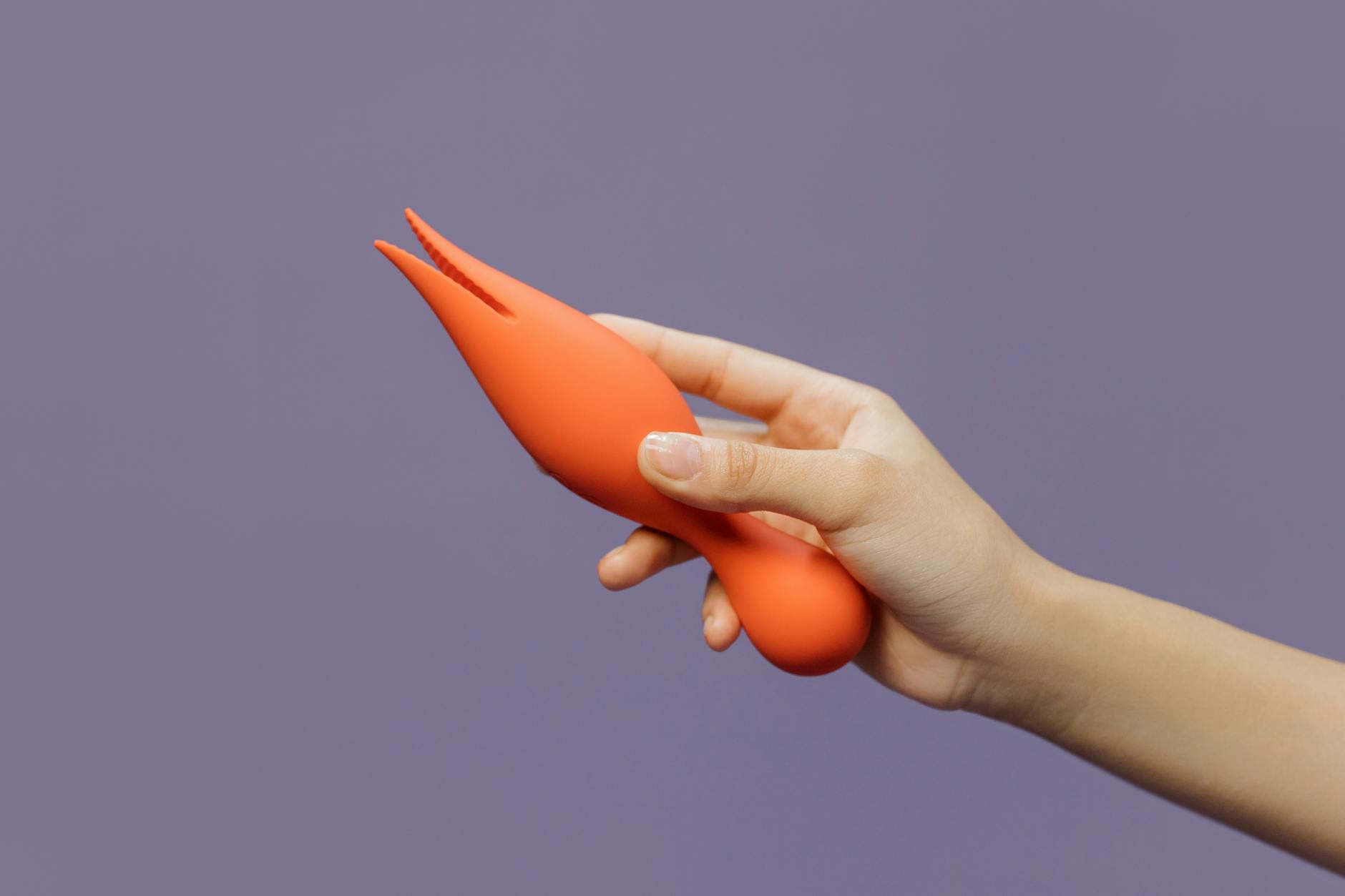
Photo by cottonbro studio on Pexels
Start with the lowest setting, not the middle one
I know there's an instinct to test the middle intensity first. Don't. If you're sensitive, pattern 1 is your baseline. Spend at least five minutes on pattern 1 alone. Let your body adjust to the sensation. You're teaching your nervous system that this kind of stimulation is safe and pleasurable, not threatening.
The Lemon Clit vibrator has five patterns, but sensitivity isn't about bouncing between them. It's about depth. Staying with pattern 1 until it feels genuinely good takes longer than you think. Two minutes is not enough. Five to ten minutes lets your body downshift, endorphins release, and sensation normalize.
Use clothing or a barrier at first
This sounds counterintuitive, but here's why it works. If direct suction still feels too much, layer a thin piece of fabric between your skin and the cup. Cotton underwear, a thin sleep shirt, even a piece of tissue. This softens the sensation without removing it completely. You're still getting the benefit of suction stimulation, but the signal travels through the barrier first, which your nervous system perceives as gentler.
Many people find that after ten to fifteen sessions with a fabric barrier, they can gradually shift to direct contact. Your sensitivity hasn't changed. Your nervous system has recalibrated what "normal" sensation feels like.
The positioning that matters
Angle changes intensity dramatically. If you're lying flat with the vibrator directly on your clitoris, that's maximum pressure. Instead, angle it slightly upward, toward your pubic bone. This distributes suction differently and often feels less intense. Some people find that placing it off-center, so the cup sits partly on your clitoris and partly on the surrounding tissue, reduces intensity while keeping sensation.
You're not looking for the "perfect" position. You're looking for the position where sensation feels pleasurable instead of overwhelming. That might mean the vibrator is slightly off where you'd expect it to be. That's fine.
Breathing changes everything
When sensation feels like too much, people instinctively hold their breath. Your nervous system interprets that as a stress response, which makes everything feel sharper. Deliberate breathing does the opposite. Slow in-breath for four counts, out-breath for four counts. This activates your parasympathetic nervous system, which is the relaxation response.
Breathing also helps you notice what's happening in your body. Between breaths, notice where you feel sensation. Is it sharp? Diffuse? Building? Stable? This awareness helps you stay present instead of bracing against discomfort.
Build tolerance slowly, or don't
Here's where I need to be clear: building tolerance to sensation is optional. You don't have to work your way up to higher settings or direct contact. If pattern 1 through a fabric barrier with specific positioning feels perfect, that's your answer. Pleasure isn't about graduating to higher intensity.
That said, some people do notice that with consistent use over weeks, their sensitivity threshold naturally shifts upward. The key word is consistent. Three times a week with a Lemon Clit vibrator on the same low setting teaches your nervous system gradually that this sensation is safe and good. Random, infrequent use keeps you in the learning phase.
If you're using a lemon clitoral vibrator as part of partnered exploration, mention this. Your partner doesn't need to understand the neurology, but they need to know: this isn't about not wanting pleasure. It's about receiving it in a way that actually works for your body.
When sensitivity is trauma-related
Sometimes touch feels intolerable because of past hurt. Your body learned that sensation meant harm. No vibrator setting fixes that alone. What helps is gentle, repeated, consensual sensation in a context where you're fully in control. A Lemon Clit vibrator gives you that control. You decide when it's on, which pattern, how long.
Many survivors of sexual trauma find that suction-based stimulation feels safer than vibration because it doesn't mimic the sensation of touch. There's no hands on you. You're completely in charge. That agency, combined with low intensity and the ability to stop immediately, can gradually rewire your nervous system's association with sensation.
If trauma is part of your story, consider exploring pleasure thoughtfully. Working with a therapist alongside your own exploration is worth it.
The role of mental load
Sensitivity isn't only physical. Anxiety, stress, racing thoughts, or worrying about whether you're "doing it right" all increase how overwhelming sensation feels. Your nervous system is partially hijacked by thinking. That leaves fewer resources for pleasure.
Before you use your vibrator, spend two minutes doing something that quiets your mind. A few minutes of focused breathing. A short walk. Dim the lights. Put your phone in another room. Tell your partner you need quiet time. These aren't luxury additions. They're the scaffolding that lets sensitivity become pleasure instead of just discomfort.
FAQs: Sensitivity and sensation
Can too much intensity actually damage my clitoris?
No, but it can create a negative association. Your nervous system learns that vibration means overstimulation, which makes you tense up the next time. That tension actually reduces pleasure and can increase sensitivity. Using lower settings consistently trains your system that vibration is safe, which paradoxically can increase pleasure over time.
Will my sensitivity ever decrease without a barrier?
Yes, often. With consistent, gentle use over weeks, many people find they can gradually transition from barrier use to direct contact. But that's not the goal. The goal is pleasure. If barrier use is your answer, that's complete.
What if even the lowest setting feels like too much?
Start with your vibrator off. Just let the suction cup sit on your skin for a minute or two without any pattern active. Let your body get used to the presence of it. Then try pattern 1 for thirty seconds, then stop. Build up duration slowly. There's no race.
Does sensitivity mean I'm broken?
Absolutely not. You have a more densely innervated clitoris, or a nervous system that processes sensation more acutely. That's not broken. It's different. And there are tools, like a Lemon Clit vibrator's suction technology, that work specifically for different nervous systems.
Will my sensitivity change with my cycle or menopause?
Yes. Hormonal fluctuations affect nerve sensitivity, lubrication, and arousal. You might find that pattern 1 feels intense mid-cycle and fine during other phases. That's normal. Check in with your body each time instead of assuming one setting works all month.
Can I use my lemon vibrator if I've had genital surgery or modification?
Maybe, and that conversation needs to be with the provider who did the procedure. Suction-based stimulation is gentler than vibration, but sensitivity after surgery is individual. Go slowly, start with the off setting just to acclimate, and stop if anything feels wrong.
The actual outcome you're building toward
The point of using a lemon clitoral vibrator when sensation feels intense isn't to "fix" yourself. It's to find a pathway to pleasure that works for your specific nervous system. Some people spend their whole lives thinking they can't enjoy vibration because they haven't found the right approach. A suction-based tool, the lowest intensity, a barrier if needed, and permission to modify everything is often the key.
Pleasure isn't about graduating to harder, faster, more intense. It's about finding what actually feels good for you. Once you do, everything else becomes easier. Your body relaxes. Your mind quiets. Sensation stops feeling overwhelming and starts feeling like exactly what you wanted.
That's worth the time it takes to get there.
Sources
- Komisaruk, B. R., & Whipple, B. (2005). "Functional MRI of the brain during orgasm in women with complete spinal cord injury." Progress in Brain Research, 152, 127-140.
- Owens, I., & Halley, M. (2009). "Clitoral size variability and the relationship to female sexual satisfaction." Journal of Sexual Medicine, 6(5), 1415-1422.
- Porges, S. W. (2011). The Polyvagal Theory: Neurophysiological Foundations of Emotions, Attachment, Communication, and Self-regulation. W.W. Norton & Company.
- Kingsberg, S. A. (2002). "The impact of aging on sexual function in women and their partners." Archives of Sexual Behavior, 31(5), 431-437.