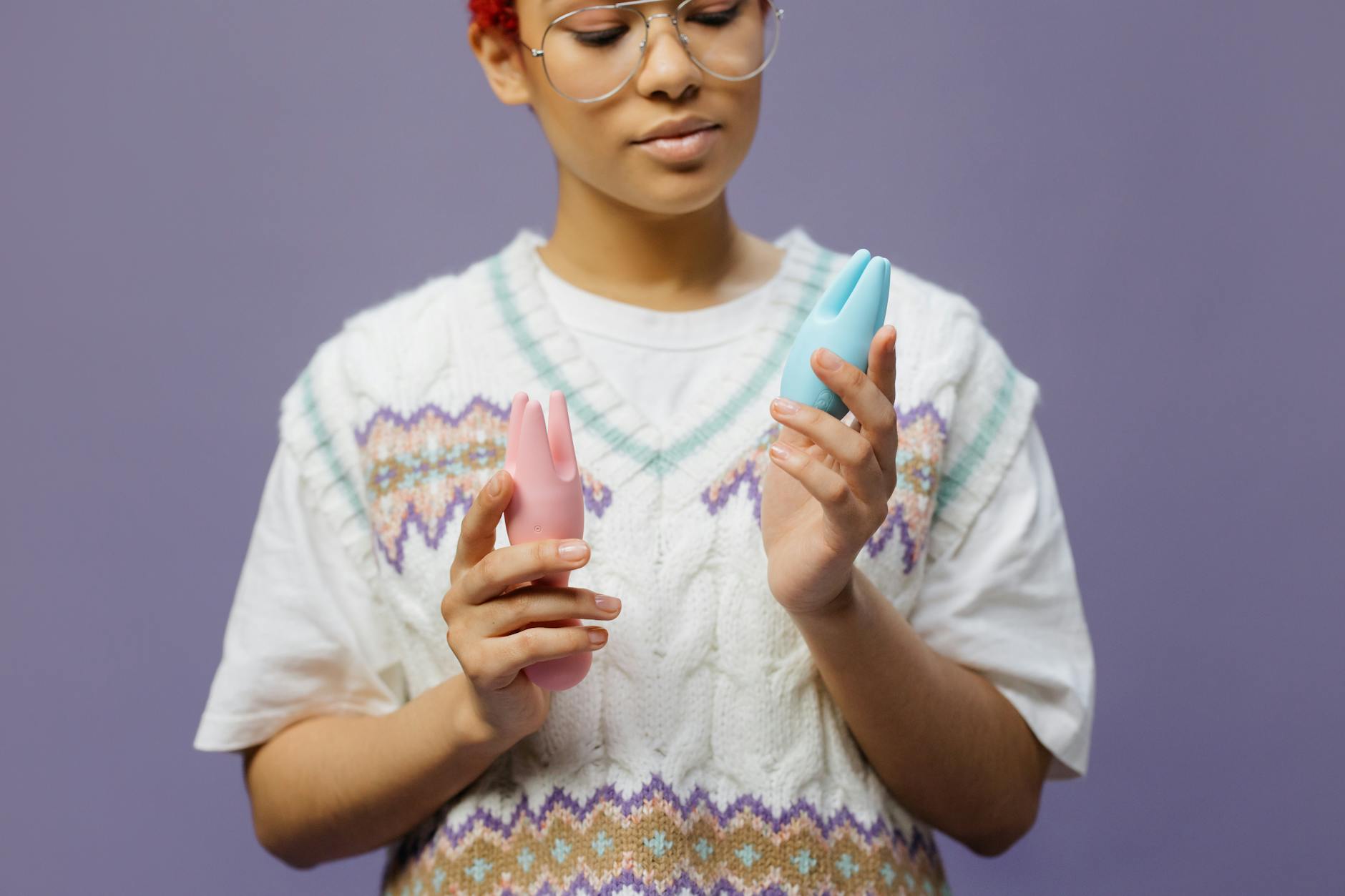
Let's talk about what actually happens when you turn the dial
Most people buy a lemon vibrator, turn it on, and stay on the same pattern the entire time. Which is fair. But you're leaving something on the table. The intensity settings on your lemon clitoral vibrator aren't just there to look fancy. They're a direct line to different kinds of pleasure, and knowing how to use them changes everything.
Here's the thing nobody mentions: your body gets habituated to a single pattern. After a few minutes, your nervous system stops registering the stimulus as urgent. You feel numb, even though the vibrator is still working. But when you switch patterns strategically, you wake your body back up. It's not about going harder. It's about going differently.
Understanding the intensity spectrum on a lemon sucker
Most lemon vibrators have between five and twelve intensity levels, plus multiple patterns. The entry-level settings (patterns 1 through 3) tend to be broad and diffuse. They stimulate a wider surface area without deep concentration. That's useful. It's how you warm up.
Middle settings (patterns 4 through 7) narrow the focus while maintaining steady rhythm. These are your workhorse patterns. Most people find orgasm easiest here because the stimulation is precise enough to build momentum, but not so intense that it feels overwhelming.
Higher settings (patterns 8 and above) concentrate all the energy into a tight, rapid pulse. These feel sharper, more clinical, sometimes even uncomfortable if you jump straight into them. But after you've built arousal across the lower patterns, they can trigger orgasm in seconds.
Then there are the pulse patterns. Some have rhythmic waves (slow, then fast, then slow). Others jump around unpredictably. These are mental breaks, and they're useful when you've plateaued and need your body to reset.
How to start: the warm-up approach
If you're new to intensity settings, resist the urge to crank it immediately. Your clitoris has about eight thousand nerve endings packed into a tiny space. That sensitivity means you need a ramp-up, not a shock.
Start on pattern 1 for two to three minutes. Your body isn't ready for precision yet. You're priming blood flow, activating arousal pathways in your brain, and getting your nervous system interested. This feels subtle. That's the point.
After three minutes, move to pattern 2. This is where you start to feel the difference between patterns. Pattern 2 usually hits slightly faster or with a different rhythm than pattern 1. Spend another two to three minutes here while you focus on fantasy, sensation, or your partner's presence.
Move to pattern 3 when your body starts to feel responsive. Your breathing might deepen. Your pelvic floor might start contracting slightly on its own. This is your sign that arousal is building, and your body is ready for a tighter focus.
The middle patterns: where most pleasure lives
Patterns 4 through 7 are where the work happens. This is where you spend the most time, and where you'll probably find orgasm most reliably.
If you're building toward a clitoral orgasm alone, settle into whichever pattern feels closest to friction without being intense. For many people, that's pattern 4 or 5. You'll feel a steady, almost metronomic sensation. Let your mind relax into it. Arousal should feel like it's climbing steadily, not spiking.
If you're with a partner, these middle patterns are where you can actually communicate and move together. Your partner can stimulate you with the lemon vibrator while you guide them on pressure, speed, and whether you need them to stay steady or adjust slightly. The pattern isn't so intense that it overrides everything else.
When to jump up to high intensity
Not everyone wants high intensity, and that's completely valid. But if you've built arousal steadily and your body is asking for more, moving to patterns 8 through 12 can feel transformative.
The trick is timing. Jump to high intensity too early and you'll feel overstimulated or numb. Wait until you're already close to orgasm, then switch. Your body will feel the change as a sudden spike, and that contrast often tips you over the edge faster than staying in one pattern.
With a partner, warn them before you switch. "Move to pattern 8" gives them one second to adjust. Surprise jumps in intensity can feel jarring if you're not expecting them.
Pulse patterns and the plateau problem
Pulse patterns exist for one reason: to keep your body from adapting. If you're approaching an orgasm but can't quite reach it, and staying in one pattern is making you feel stuck, switch to a pulse pattern. The unpredictability resets your nervous system's attention.
Think of it as the mental equivalent of your partner changing angle or speed during sex. Your body gets bored with consistency. A pulse pattern breaks that boredom.
Some pulse patterns slow down and speed up rhythmically (wave patterns). Others jump between random intervals. Try both. You'll develop a preference. That preference isn't fixed. It changes based on mood, arousal level, and what your body needs that day.
Solo exploration versus partnered use
When you're using your lemon vibrator alone, you have total control. You can spend five minutes on pattern 3, switch to pattern 6 for ninety seconds, drop back to pattern 2 if you get overstimulated, and try pulse patterns whenever you want. There's no communication needed. There's no consideration of whether your partner is tired or bored. You're optimizing purely for your own pleasure.
When you're with a partner, intensity settings become a conversation. Your partner might be holding the vibrator while you guide them through patterns. Or you're holding it while they're touching you elsewhere. In either case, jumping around constantly feels disruptive. Most couples find that settling into one pattern for a few minutes, then consciously switching together, works better. It gives both of you time to notice the shift and respond.
If you're new to partnered use, read more about how to use a lemon vibrator with your partner for guidance on communication and rhythm.
Building your personal intensity blueprint
You probably won't use all twelve patterns every time. Most people develop a signature sequence: their own pattern of warm-up, building, and finish.
Yours might be: pattern 2 (three minutes) into pattern 5 (four minutes) into pattern 10 (one minute, orgasm). Someone else's might be: pattern 1 (five minutes) into a pulse pattern (until bored) into pattern 6 (until finish). Both are right.
The key is experimentation. Next time you use your lemon clitoral vibrator, pick three patterns and commit to a timing strategy. Notice what your body likes. Notice what leaves you numb. Notice what actually works.
After a few sessions, you'll have a rhythm. But pleasure isn't static. Your preferences will shift based on stress, your menstrual cycle (if you have one), what's happening in your relationship, and frankly random Tuesday feelings. Give yourself permission to change your sequence whenever you need to.
Safety and overstimulation
One genuinely important thing: overstimulation is real, and it feels like numbness, not pleasure. If you're using your lem vibrator and suddenly the sensation feels distant or dull, you've probably spent too long at high intensity.
The fix is simple. Stop. Put the vibrator down. Wait five to ten minutes. Drink water. Let your nervous system reset. Then come back to a lower pattern if you want to continue. You're not broken. Your body just needed a break.
If you notice you're always skipping straight to high intensity because lower patterns feel boring, that's often a sign you need to slow down and rebuild sensitivity. Spend a week staying in patterns 1 through 4. Your body will resensitize, and middle patterns will feel new again.
People also ask
Which intensity setting on a lemon vibrator is best for beginners?
Start with pattern 2 or 3 after a warm-up minute on pattern 1. These feel focused but not overwhelming. Beginners often jump to high intensity expecting it to feel better, but it usually just feels jarring. Lower patterns are how you build arousal safely and let your body figure out what it actually wants.
Can you damage your clitoris by using a vibrator on high intensity?
Your clitoris is tougher than you think, but sustained high intensity for extended periods can numb sensation temporarily. That's not damage. It's habituation. Take a break, come back to lower patterns, and your sensitivity returns. If you're using your lemon clitoral vibrator correctly, your body will tell you when high intensity is too much.
How long should I spend on each intensity level?
There's no rule. Spend two to three minutes on warm-up patterns, then switch based on how your body feels. If you're building arousal steadily, stay. If you feel stuck, switch. Most people find that changing patterns every two to five minutes keeps sensation fresh without feeling chaotic.
Is it normal to need higher intensity over time?
Sometimes. But before you assume you're building tolerance, ask yourself whether you're spending too long at the same pattern. Habituation is about duration, not about a permanent shift in your sensitivity. Lower your pattern intensity back down for a few sessions, and you'll usually feel just as stimulated at moderate levels again.
Can you use intensity settings differently with a partner?
Yes. When your partner is controlling the lemon vibrator, they can feel the difference between patterns too. Communicate about which ones you like, stay steady for a bit, then switch together. Jumping patterns every thirty seconds feels disruptive. Staying in one pattern for two to three minutes, then consciously shifting, works better.
What if no intensity setting feels right?
You might have the vibrator at an angle that doesn't suit your body, or you might not be aroused enough yet. Move the vibrator slightly. Take a mental step back and focus on fantasy or sensation rather than outcome. Sometimes the problem isn't the intensity setting. It's that your nervous system isn't ready to receive it yet.
The intensity sweet spot is personal
Here's what I've learned coaching couples through pleasure over the years: the best intensity setting is the one that makes you feel like you're not thinking about the vibrator anymore. You're just feeling. When you hit that, stay with it. When it stops working, switch. Your lemon vibrator has a whole menu of options. Use them.
If you want deeper guidance on building pleasure with a partner, why lemon vibrators feel different after 40 covers how arousal patterns shift as bodies change. Or if you're just starting out, how to use a lemon clitoral vibrator walks through the basics. Either way, you deserve to actually enjoy the tool you've invested in. That means knowing how to use it.